
 Search

 Sign In


Electrification and Energy Policy
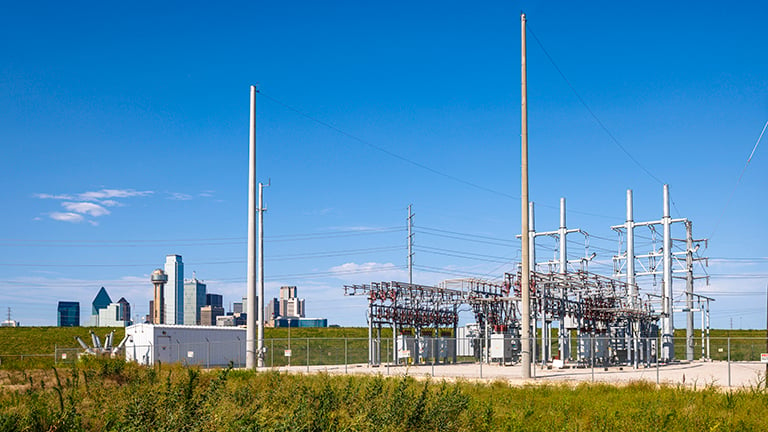
Congress needs to pursue comprehensive energy policies designed to meet electricity demand throughout the U.S. economy, including increased investment in electrical grid expansion and modernization, permitting reforms for energy generation and transmission projects, and increased coordination on major regional projects across multiple jurisdictions.
Download NAIOP's position on Electrification and Energy Policy
Issue
Many commercial real estate projects are being delayed for years, or are not being pursued at all, because utilities cannot guarantee they can meet electricity demand. Congress must act to ensure that the U.S. has sufficient electrical capacity for the critical real estate and industrial development needed to support continued robust economic growth. A comprehensive policy approach is needed in the following areas:
- Expansion and modernization of the electrical grid necessitate federal investment to enable power generators to connect new facilities more quickly to the grid. Electrical grid expansion should allow for an “all-of the above” energy policy, including for renewable energy sources such as wind and solar.
- The system of federal energy permitting must be reformed in order to facilitate grid expansion and increased production of electricity from all energy sources. Shortened federal permitting timelines with increased decision-making transparency, and reform of litigation procedures to eliminate unnecessary delays, are needed.
- Major regional transmission projects often involve utilities and government entities from multiple states and local jurisdictions, and can take up to seven times longer to build than energy generation installations. Federal policies are needed to promote and incentivize regional coordination.
- The costs and benefits of the large energy infrastructure projects needed to meet the growing national demand are often not shared equally among the consumers of electricity. The ratepaying consumer in one state will oppose infrastructure investments paid through higher utility bills that provide energy to users in other states. Congress needs to develop policies that enable utilities to pursue major transmission projects of strategic importance.
Congress must ensure that federal energy policy is designed to meet the surging need for electricity. Without action, utility costs are sure to increase and become less affordable for consumers, fueling opposition to development of the manufacturing plants, warehouses, cold storage facilities and other commercial structures critical to the nation’s future economic growth and competitiveness.
Key Points
- Electricity consumption in the U.S. will reach its all-time high this year, according to the U.S. Energy Information Agency. Demand is expected to surge over the next five years, driven by the need for data centers, reshoring of manufacturing facilities, local building electrification ordinances and increased numbers of electric vehicles.
- Without a comprehensive federal response that ensures sufficient electricity is available to meet the growing demand, electricity will become less affordable to the public and commercial businesses, severely impacting economic growth.
- Investment in modernizing the electrical grid and expanding its capacity, federal permitting reform, and greater coordination on expanding transmission capability across stateliness is needed.
- The projected shortfall in electricity generation will hinder the commercial real estate development needed to support a rapidly transforming economy.
Contact
Aquiles Suarez
Senior Vice President for Government Affairs
suarez@naiop.org | 703-904-7100
Eric Schmutz
Senior Director of Federal Affairs
schmutz@naiop.org | 703-674-1450