 Search

 Sign In


Adaptive Reuse and Housing Affordability
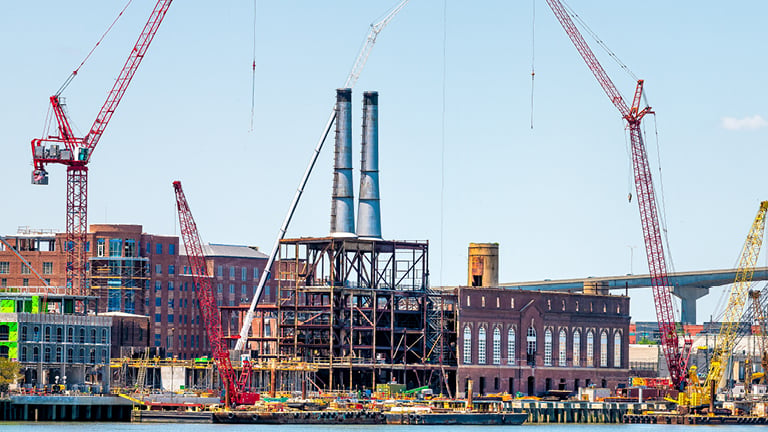
Congress should pass legislation to incentivize the adaptive reuse of vacant and underutilized commercial buildings for residential purposes. Adaptive reuse property conversions can help increase the supply of affordable housing while helping to restore economic vitality to communities dealing with the impact of post-pandemic workplace changes. The Revitalizing Downtowns and Main Streets Act (H.R. 2410), introduced by Representatives Mike Carey (R-OH) and Jimmy Gomez (D-CA), would create a tax incentive to offset the costs of conversions and give local communities a needed tool to increase their supply of rental housing.
Download NAIOP's position on Adaptive Reuse and Housing Affordability
Issue
Many local communities are struggling with a lack of affordable housing due to a severe shortage of rental housing supply. The current production of rental housing units is not expected to meet the projected demand over the next decade.
At the same time, communities are still coping with the post- COVID-19 impact on their commercial real estate markets, resulting in historically high vacancy rates and underutilization of commercial structures. While Class A trophy buildings sustain – they have recovered market competitiveness – many Class B and C commercial structures will become stranded assets unless repurposed for economically viable uses.
In many instances, vacant and underutilized commercial buildings are suitable for conversion to residential usage and could become a part of a comprehensive approach to increasing housing supply, but the resulting conversion costs prevent adaptive reuse of these structures. The decline in property values of these structures also hurts localities that depend on property and sales taxes as sources of revenue.
To help address these challenges, Congress should pass the Revitalizing Downtowns and Main Streets Act (H.R. 2410), introduced by Representatives Mike Carey (R-OH) and Jimmy Gomez (D-CA). The legislation would create a 20% tax credit for the eligible conversion costs of an adaptive reuse project, providing communities with a much-needed additional tool to increase rental housing supply and affordability, while repurposing commercial real assets in their localities to more productive use.
Key Points
- Restrictive zoning, high production costs, high interest rates and chronic underbuilding have led to a severe housing supply shortage in the U.S. An additional 4.3 million units of rental housing are needed by 2035 to meet the projected demand. The tighter supply has led to a housing affordability crisis in many communities, with many families facing increased rents as a result.
- The national office vacancy reached a three-decade high of 20.1% in late 2024 as a result of COVID-19-induced remote work and hybrid work patterns. While higher-end, newer Class A office buildings remain competitive, older Class B and C buildings are not returning to prior occupancy levels.
- Many of these vacant and underutilized buildings could be adapted for residential use, but high conversion costs and other challenges prevent these adaptive reuse efforts. Incentives that offset some of these costs would result in additional housing supply.
- The bipartisan Revitalizing Downtowns and Main Streets Act (H.R. 2410), introduced by Representatives Mike Carey (R-OH) and Jimmy Gomez (D-CA), would create a tax incentive to offset some of the costs of these conversions, giving communities an additional tool to increase the supply of rental housing.
Contact
Aquiles Suarez
Senior Vice President for Government Affairs
suarez@naiop.org | 703-904-7100
Eric Schmutz
Senior Director of Federal Affairs
schmutz@naiop.org | 703-674-1450