Developers would be wise to consider this critical piece of infrastructure before breaking ground on new projects.
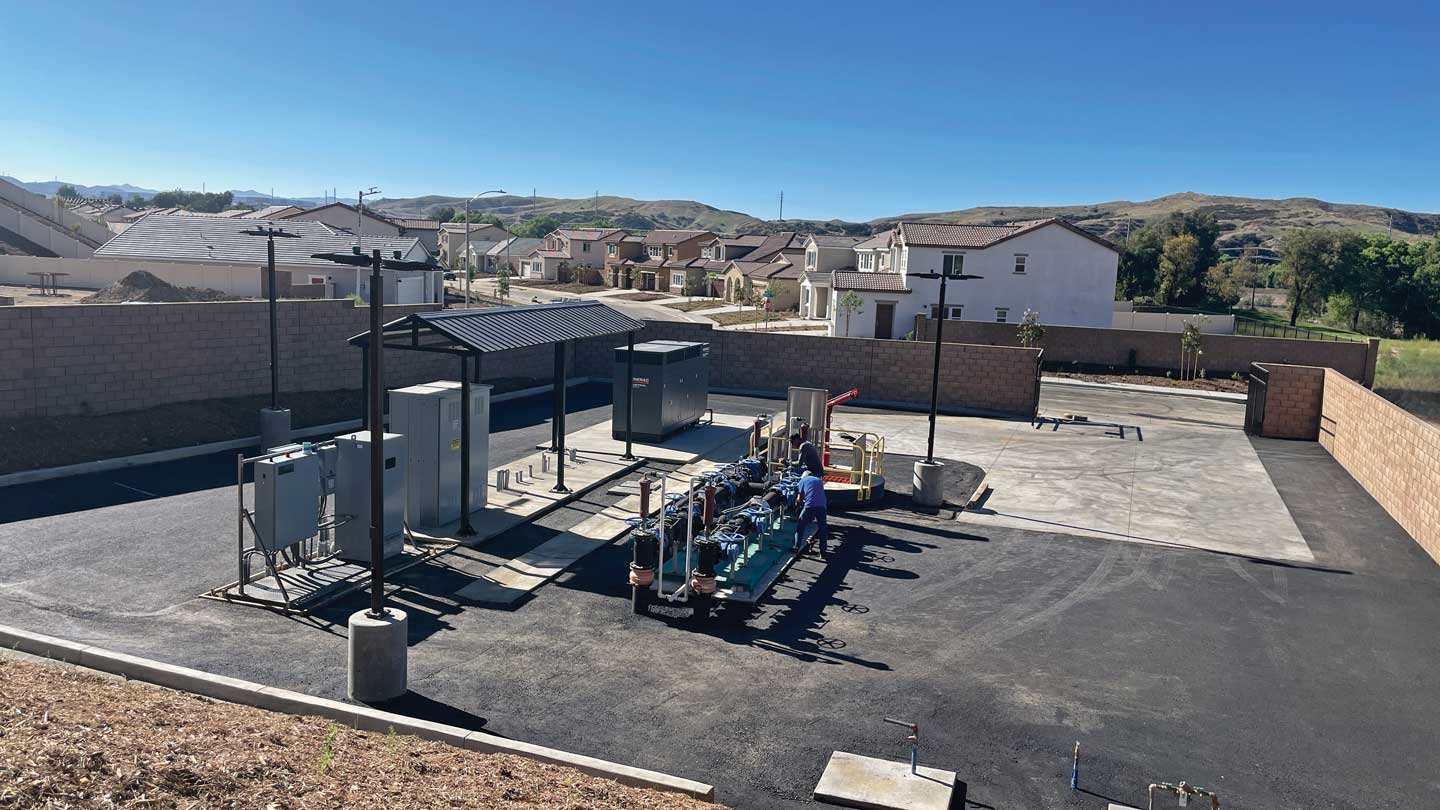
When PulteGroup set out to build a new housing development on the outskirts of Riverside, California, the home construction company encountered a common challenge: no access to public sewer infrastructure. The choice was stark — wait years for utilities to reach the site or build a wastewater pump station to serve the project.
Waiting wasn’t an option, so PulteGroup explored the latter.
What Is a Wastewater Pumping System?
Pumping systems are a way to ensure that water flows in the desired direction regardless of the area’s gravitational slope. These systems have major structural, mechanical, electrical, and control and communication elements.
When designing pumping systems, engineers must understand and account for the site’s layout, access, egress, power and utilities, as well as other factors such as odor control, noise abatement, backup power and chemical injection. Costs can vary significantly, from thousands to millions of dollars, based on complexity, location, utility access and district standards. Early stage planning is critical for project success.
Five Steps Developers Shouldn’t Skip
The overarching challenge for developers is how to get a pump station that meets requirements and standards without breaking the company’s budget or derailing its project timeline. Taking the following steps will help with that process:
Define ownership: If the pump station is publicly owned, the developer will need to meet the design criteria, deed land to the public entity and go through the approval process. If the pump station is privately owned, the developer must budget for maintenance, staff training, and system monitoring by a third party.
Define the standards: Identify what the local requirements are, as well as the site-specific standards. A project manager, or engineer, should be able to define the design criteria for the structural, mechanical, electrical and communication aspects of the pumping system. These aspects include which type of controller to use, what valves and what pumps, where components should be located and so on.
Identify the location: Determine how much land is required and the best location for the site. A few factors to consider include soil composition, the water table, existing structure in the area and elevations at the site. The average system and site dimensions are 80 feet by 80 feet.
Hire an engineer: Engage a qualified engineer or pumping system design firm with the expertise to provide accurate designs, budgets and construction estimates for the entire project.
Document everything: From specifications to operations and maintenance manuals, ensure the system is thoroughly documented. Training materials and testing protocols are essential for handoff to the owner and for long-term success.
Highland Grove: A Case Study in Creative Planning
PulteGroup’s Highland Grove development faced a unique hurdle. Not only was there no sewer infrastructure, but the water district also lacked the capacity to accept wastewater during the day when peak flow hours typically occur.
As a solution, PulteGroup opted for a temporary, privately owned pump station that stores wastewater in underground tanks and pumps to the treatment plant only at night. This interim approach kept the project moving while respecting the district’s constraints.
Civil engineering firm Albert A. Webb Associates, which had prior interactions with the water district, was instrumental in getting the pump station approved. The project’s overall success hinged on trust, design compliance and a credible plan to transition to gravity.
The goal of a new pump station is most often to overcome terrain and to get back to a point where gravity can take over. As the water district expands its infrastructure, the development will be able to let gravity do the work. A pipe will be added in future phases, allowing the development to drain directly into the district’s collection system.
In this case, the water district agreed to the temporary, privately owned pump station because:
- The system met all district requirements (brand of pumps, controller, construction material, etc.).
- The project was already entitled and partially approved.
- The team offered a $3 million bond or easement for the future gravity line.
PulteGroup was on a two-year timeline to build a permanent system once the easement was finalized.
“It was a win-win,” said Patric Lynam, director of planning and entitlements at PulteGroup. “The district is being helped by the future gravity build-out. The developer got to build and occupy prior to the completion of the gravity sewer.”
Romtec Utilities designed and supplied the wastewater pump system package with a precast wet well and valve vault, along with two 13,000-gallon high-density polyethylene storage tanks and duplex 7.5-horsepower KSB submersible pumps. A timer was added to disable pump station operation during peak hours. In addition, a float was added to trigger an override in case of a high-level event. Site dimensions are approximately 100 feet by 100 feet by 60 feet.
Plan for Pumps
Pump stations are critical to modern development. With early planning, the right technical partners and a solid strategy, pump stations do not just support projects, they help move them forward.
If an upcoming project includes a pump station, treat it like the infrastructure backbone that it is.
Mark Sheldon is the vice president of operations at Romtec Utilities.
Key Lessons for DevelopersInclude pump stations in the entitlement checklist. Start utility conversations early. If a pump station is required, planning the land dedication, budget and ownership should be part of the initial plan. Interim solutions can be an option. Temporary private ownership can help move a project forward while waiting for infrastructure to catch up. Partner with experienced vendors. Look for companies that offer turnkey pump station systems with engineering, supply and installation guidance. Understand the long-term effect. Someone will need to maintain the pump station, whether public or private. Be sure to budget accordingly. |