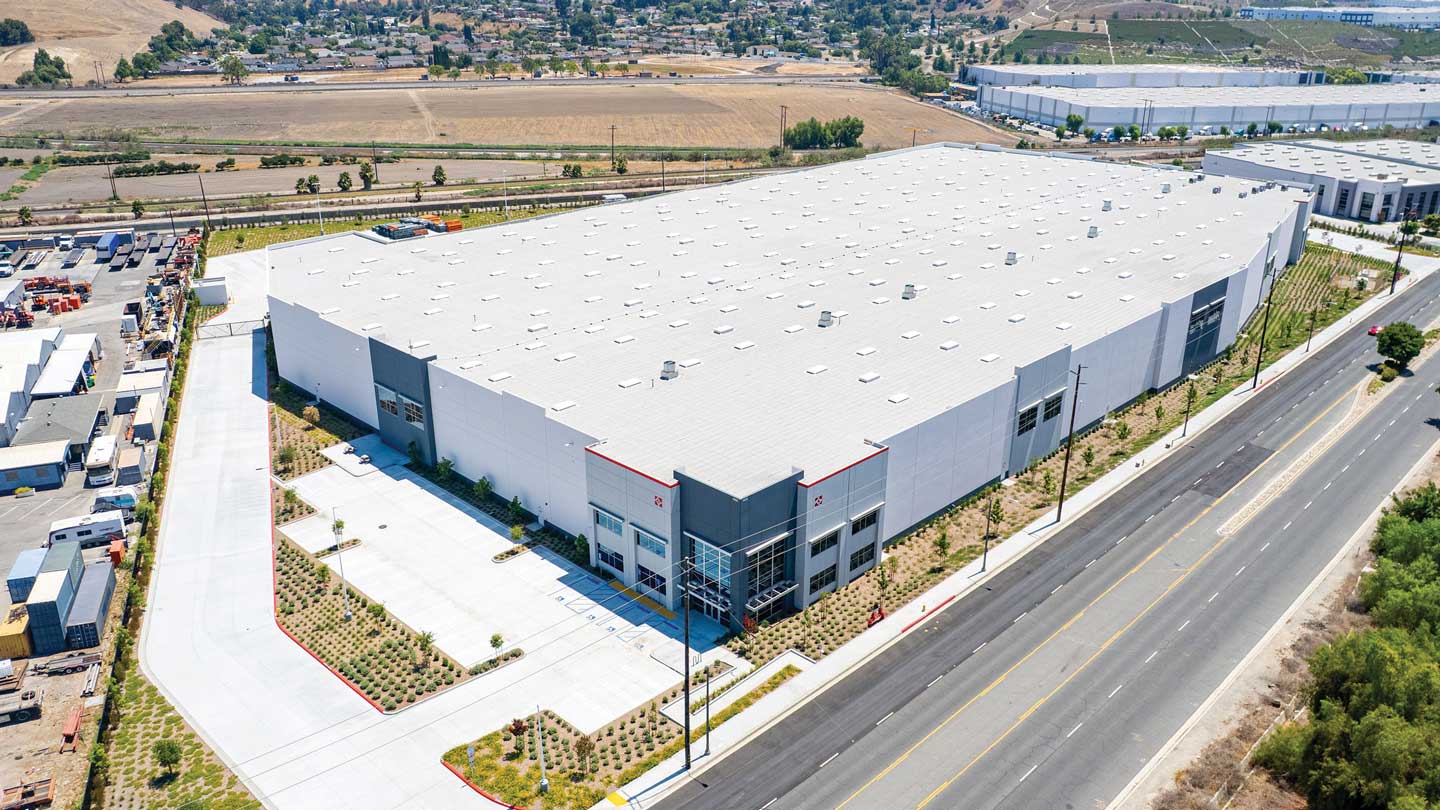
A data-driven environmental strategy transformed a Southern California site impacted by contamination into a high-performing industrial asset.
For many years, sustainability in industrial real estate occupied a separate lane from the core drivers of value such as rent, transportation access and clear height. It was a feature developers might mention in a brochure but rarely a deciding factor.
That distinction no longer holds. In the current logistics and industrial real estate market, sustainability and performance are effectively the same conversation. The decisions that reduce carbon and resource use are the same ones that lower operating costs, increase reliability, and enhance the comfort and productivity of the people who work inside.
The forces driving this convergence are both economic and operational. Modern distribution centers are power-intensive facilities, running around the clock, with mechanical systems that extend well beyond the office into specialized warehouse zones. As automation proliferates, and as tenants compete for skilled labor, efficient, comfortable and future-ready environments are no longer luxuries — they are fundamental to a building’s competitiveness.
Energy, Efficiency and the Modern Warehouse
Twenty years ago, a speculative industrial building in Southern California might have been a simple, unconditioned box. Now, it is an intricate system engineered to manage heat, light and airflow as carefully as corporate headquarters. Tenants expect LED lighting with smart controls, high-R-value insulation, high-performance dock doors, and glazing optimized for daylight and thermal balance. Each of these features improves the user’s bottom line while simultaneously advancing sustainability goals.
This is a practical, data-driven evolution rather than a philosophical one. Extended operating hours mean greater power consumption. Automated racking and robotic systems require consistent voltage and temperature stability. The more energy-intensive a warehouse becomes, the more valuable every efficiency measure is. What once qualified as a “green extra” is now essential to keeping operating expenses predictable and manageable.
Developers are also thinking ahead. Solar readiness and EV infrastructure are increasingly embedded in the base design of new facilities. Engineering a roof to accommodate solar panels, prestubbing power for truck and passenger EV chargers, and completing underground conduit systems during initial construction are all ways to future-proof an asset. These steps have minimal up-front cost compared with retrofitting later, but they can save tenants and owners significant time and capital when future energy demands increase.
The Human Dimension of Performance
Sustainability is not just about kilowatt-hours; it is also about people. The health, safety and comfort of warehouse workers have become central considerations in site design. Access to daylight, improved air quality, better acoustics and amenities that support employee well-being all contribute to tenant performance metrics. Logistics operators weigh these environmental factors heavily now, particularly in tight labor markets where retention is critical.
From a design perspective, these priorities complement energy efficiency. The same skylights that reduce reliance on artificial lighting enhance worker satisfaction; HVAC systems tuned for air quality tend to be more energy-efficient. As the market evolves, developers are learning that a building optimized for its people is usually a building optimized for its energy use.
Rethinking Location and Resilience
The convergence of sustainability and performance also extends beyond the four walls of the warehouse. Traditional site selection, which has long been defined by cost, labor availability and proximity to highways, now includes resilience and carbon impact. Locating closer to end consumers can cut last-mile emissions and delivery times. Selecting sites with lower exposure to heat, flooding or power disruption can reduce downtime and insurance risk.
Industrial users increasingly treat these location choices as tools in meeting corporate net-zero goals. A distribution network that reduces truck miles and energy intensity can be both greener and more cost-effective. The most sustainable sites, in other words, often turn out to be the most operationally resilient.
A Case Study in Convergence: CapRock West Valley Logistics
CapRock West Valley Logistics, a newly completed, 269,780-square-foot LEED-certified warehouse in Southern California’s San Gabriel Valley, illustrates how sustainability and performance come together when a project is strategically designed, engineered and remediated. While the asset’s location in one of the nation’s most supply constrained logistics corridors provides unquestioned value, the true story of West Valley is about transformation: how a data-driven environmental strategy turned a long-blighted, contamination-impacted site into a high-performing industrial asset.
From a physical standpoint, West Valley Logistics is built for modern distribution and logistics demands. Its 40-foot clear height; two-story, 10,000-square-foot office; rear-load design; and expansive 240-foot truck court enable efficient throughput. Twenty-eight dock-high doors, two grade-level doors, 45 trailer stalls, 130 parking spaces and a 4,000-amp power supply support high-intensity operations. Concrete tilt construction, a reinforced slab and a durable four-ply roof assembly ensure longevity. These features mirror the needs of modern distribution users. However, the journey to project delivery began well before construction.
Transforming a Challenged Site Through Science
West Valley Logistics’ 12.5-acre site carried decades of environmental legacy issues from historic military and aviation component manufacturing. Impacted soil and vapor placed the property under active oversight by the Los Angeles Regional Water Quality Control Board (RWQCB). Previous owners had struggled to advance remediation, and standard cleanup methods, including mass excavation, would have required large-scale soil export, extensive trucking, prolonged timelines and unsustainable costs. In short, the project was at risk of remaining undevelopable.
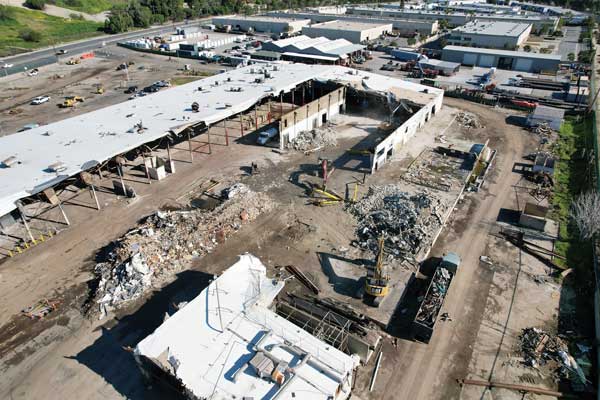
Using standard cleanup methods to remediate West Valley Logistics’ 12.5-acre site would have put the project at risk of remaining undevelopable. Courtesy of CapRock Partners
In 2020, CapRock Partners purchased the site for $30 million and pursued a different approach grounded in scientific rigor. Using geostatistics, a spatial modeling technique more common in natural resource exploration than in real estate development, CapRock’s consultant, GSI Environmental, collected and analyzed soil and vapor samples across multiple depths. This data was used to build a three-dimensional contamination model that precisely mapped where pollutants were concentrated and where they were not.
With this model, excavation could be targeted rather than across the site. Only contaminated “hot spots” were removed, dramatically reducing truck trips, emissions, dust and equipment run time. Regulators gained confidence in the transparent, data-supported decision-making, enabling faster progress toward closure and saving millions of dollars in remediation costs — enough to make the redevelopment viable.
Turning Waste Into a Resource
GSI Environmental applied the same data-driven discipline to site materials. A former 235,000-square-foot building had left behind a large concrete slab. Rather than assume full demolition and disposal, concrete was tested and segregated into clean and impacted material. With RWQCB approval, the uncontaminated concrete was crushed and reused as engineered fill.
This single step reduced landfill waste, limited new aggregate needs and significantly cut truck traffic, resulting in an environmental and economic win.
Designing for Long-term Safety
Even after selective excavation, low-level vapor intrusion risk was a potential concern. To ensure long-term indoor air quality, CapRock installed a passive vapor intrusion mitigation system (VIMS) beneath the entire warehouse footprint.
The VIMS installation was performed concurrently with building construction rather than as a stand-alone activity. Once the construction crew completed a given section of the building, Gergen Construction followed immediately to install the VIMS, so the two activities progressed in tandem. As a result, the sequencing caused a modest impact to the construction schedule, prolonging the project on the order of approximately 10% to 20% rather than a full additional VIMS construction period. The total VIMS cost was nearly $2 million.
The system requires no energy, relies on a continuous vapor barrier and venting network, and undergoes rigorous leak testing and post-occupancy air sampling. It delivers protection without ongoing mechanical load or maintenance, providing a direct example of performance and sustainability reinforcing each other.
The Result: A High-performing, Future-ready Warehouse
Today, West Valley Logistics is a modern Class A distribution facility that reflects how acute sustainability and performance are intertwined. The project reduced greenhouse gas emissions, material waste and water use through selective excavation and material reuse. Its passive VIMS ensures clean indoor air without energy consumption. The efficient building design, which is supported by ample power, modern loading infrastructure and solar-ready features, positions the asset to meet the evolving needs of sophisticated logistics users.
West Valley Logistics’ immediate market absorption underscores that these choices were not just environmentally responsible but also commercially sound. Upon completion, the facility was acquired by a prominent alternative fashion company for its new headquarters, validating both the asset’s operational strengths and its long-term value.
A once-contaminated, underutilized property has been restored to productive use, delivering jobs, strengthening the regional supply chain and setting a new benchmark for sustainable industrial redevelopment in the San Gabriel Valley. At every step, the actions that improved environmental outcomes also enhanced performance, proving that the two are no longer separate considerations but mutually reinforcing drivers of successful warehouse development.
Taylor Arnett is senior vice president, CapRock Partners.
Transparent Coordination and Long-term AccountabilityEstablishing stakeholder trust was central to West Valley Logistics’ success. CapRock and its environmental partner, GSI Environmental, met with the Los Angeles Regional Water Quality Control Board weekly, sharing data in real time and coordinating cleanup and development milestones. To ensure responsibilities extended beyond construction and disposition, the team created an environmental escrow fund to finance future monitoring. This financial structure provided clarity for regulators, lenders and the eventual buyer, strengthening confidence in the site’s long-term safety and compliance. |