
The region is attracting the next generation of megaprojects through an alignment of policy, infrastructure and workforce initiatives.
When U.S. Space Command announced in September 2025 that its permanent headquarters would be relocating to Huntsville, Alabama, many of the headlines focused on national security implications. But the decision also underscored another important development: Appalachia has become a serious contender for the nation’s most competitive investments.
Already recognized for its resilience and heritage, the region is in the process of adding a new distinction — as a place where the next wave of innovation and enterprise is taking root.
As officially defined by the Appalachian Regional Commission (ARC), Appalachia encompasses more than 400 counties, stretching from southern New York through parts of Pennsylvania, Ohio, West Virginia, Maryland, Kentucky, Virginia, Tennessee, North Carolina, South Carolina, Georgia, Alabama and Mississippi. More broadly, the area follows the spine of the Appalachian Mountains, and its identity extends beyond geography to include a shared history of industry, culture and community.
Proof of Concept
Huntsville earned the nickname Rocket City decades ago, with NASA’s Marshall Space Flight Center anchoring a dense cluster of aerospace and defense activity. Cummings Research Park, the second-largest research park in the nation, and the U.S. Space & Rocket Center reinforced the city’s innovation identity. When the Department of Defense evaluated potential homes for Space Command, Huntsville offered both legacy assets and forward-looking capacity.

U.S. Space Command is relocating its permanent headquarters to Huntsville, Alabama, which is already home to NASA’s Marshall Space Flight Center. JHVEPhoto via iStock Editorial/Getty Images Plus
Policy likely played a large role in the decision to move Space Command to Huntsville. In 2023, Alabama refreshed its Jobs Act under the “Game Plan” framework, extending the program through 2028 and increasing annual caps to better compete for megaprojects. At the same time, the state continues to grow its Site Evaluation and Economic Development Strategy (SEEDS), a matching grant program to help accelerate the readiness of industrial properties statewide.
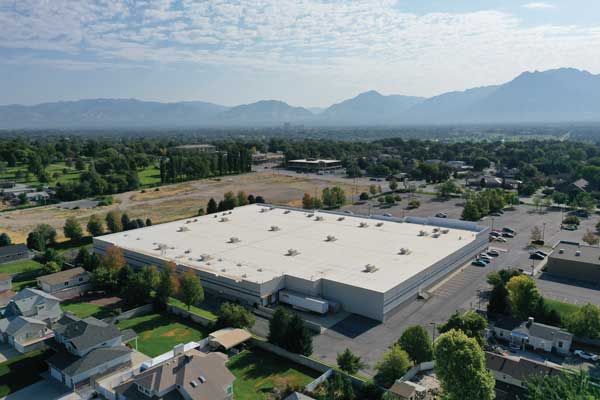
In August 2025, Alabama reinforced its status as a center for advanced manufacturing when L3Harris Technologies opened the Advanced Manufacturing Facility–South in Huntsville. The 379,000-square-foot facility, backed by over $20 million in renovations and a Defense Production Act agreement, was expected to add 40 jobs immediately and more than 100 additional jobs in the ensuing years, supplementing the roughly 800 employees already working at L3Harris sites in and around Huntsville and bolstering capability in aerospace components essential to national defense.
The Appalachian Growth Playbook
This success is part of a broader Appalachian trend. Across the region, legislatures and governors are modernizing economic development strategies with a strong focus on site selection fundamentals. By aligning policy, infrastructure and workforce, states throughout the region are positioning themselves as strategic destinations for aerospace, defense, energy and advanced manufacturing projects.
What distinguishes the current moment is not a single project or announcement but rather the consistency of signals coming from across the region.
“What we’re seeing in Jackson County reflects a much larger shift happening across Appalachia,” said Veronica Lewis, executive director of the Jackson County Development Authority in West Virginia. “Communities that once had to compete from a position of disadvantage are now showing up with prepared sites and more aligned policy. While workforce development remains a real challenge in West Virginia, that reality is pushing communities to be more intentional by strengthening pipelines, improving quality of production and working regionally to ensure growth is sustainable and achievable.”
Reports of increased investment continue to be announced at an accelerated rate in every Appalachian state.
A State-level Overview
In the northernmost portion of Appalachia, ARC and the New York Department of State invested $12.3 million across 28 projects, matched by $16.1 million in local or state funds, which together leveraged $60 million in private sector investment in 2024 alone. These efforts are projected to create or retain 376 jobs, train or educate 966 students and workers, and benefit 1 million residents in the region’s 14 Appalachian counties. This came on the heels of a 2022 announcement that $25 million in federal grants were available through ARC’s POWER Initiative to help these counties diversify their coal-impacted economies and develop competitive workforces.
Pennsylvania has committed $400 million through the Pennsylvania Strategic Investments to Enhance Sites (PA SITES) program to elevate competitive locations statewide. The commonwealth is also leaning into energy transition opportunities that promise to draw billions in federal and private sector funding. The Appalachian Hydrogen Hub, based in West Virginia, is anticipated to create 21,000 jobs, including in southwestern Pennsylvania. In fiscal year 2024, ARC supported 83 projects totaling $38.6 million in Appalachian Pennsylvania. These investments received $50.7 million in matches and attracted another $33.7 million in private investments.
Ohio has demonstrated how site readiness tools can shift investment patterns. The $750 million All Ohio Future Fund ensures infrastructure investments to make sites project-ready. The fund’s first award went to the Baltimore Avenue industrial corridor in Defiance County, which received more than $14.6 million to prime a site for a nearly $1 billion tissue plant expansion by First Quality Tissue. That figure represents the largest private investment in county history. The initiative complements Ohio’s Brownfield Remediation Program, which reclaims legacy sites for modern manufacturing use.
West Virginia is also laying new foundations for future investment. The state passed landmark legislation in 2025, the Power Generation and Consumption Act, establishing a Certified Microgrid Program and a one-stop-shop permitting portal to make the state more competitive for AI-driven data centers like the planned Fidelis Monarch Compute Campus. This law allows developers to build energy-resilient microgrid districts that can generate most of their own power and sell surplus electricity into the wholesale market while bypassing traditional utility barriers, dramatically streamlining the permitting process for high-impact facilities. The legislation includes mechanisms to direct property tax revenues into critical state infrastructure and grid stabilization funds, amplifying the economic benefits to communities.
Elsewhere in West Virginia, Nucor broke ground on its $2.7 billion greenfield sheet steel mill in Apple Grove, supported initially by an investment surpassing $75 million from the West Virginia Economic Development Authority. The site is expected to create 800 permanent jobs and over 2,000 construction roles, positioning the state as a leader in sustainable steel production. In Mason County, economic development officials are actively preparing for growth in housing and infrastructure, anticipating thousands of new jobs from Nucor and allied projects. Together, these initiatives demonstrate that West Virginia is turning its legacy in steel into a launchpad for multisector reinvention and next-generation investment.
In July 2025, Maryland announced awards under its Business Ready Sites Program to accelerate the development of competitive industrial properties, including funding for site improvements aimed at advancing shovel-ready capacity in western Maryland for the aerospace, defense and light manufacturing sectors. These sites would offer proximity to the Washington, D.C., and Baltimore markets without the cost structure of core metro locations. By pairing site development with access to a highly educated regional workforce and established federal and defense ecosystems, Maryland is strengthening the competitiveness of its Appalachian footprint for next-generation investment.
Kentucky dedicates $35 million annually to its Product Development Initiative, enhancing industrial sites across the state. In addition, in 2021, state lawmakers set aside $350 million in forgivable loans for projects investing more than $2 billion, along with $25 million for workforce training facilities. Subsequently, the state celebrated AESC’s $2 billion investment to build an EV battery gigafactory in Bowling Green, a project expected to create 2,000 jobs and strengthen Kentucky’s role as a hub for advanced manufacturing.
Virginia continues to emphasize speed to market through its Virginia Business Ready Sites Program, committing over $282 million since 2022 to site improvements statewide. In August 2024, then-Gov. Glenn Youngkin announced $126 million in funding for upgrades at 23 industrial sites to strengthen competitiveness for advanced manufacturing projects, seven of which are located in Appalachian areas of the commonwealth.
The University of Tennessee notes that the state’s recruitment and workforce efforts are driving continued investment in the region’s advanced energy ecosystem. East Tennessee even serves as the home to more than 150 nuclear-related companies. In Appalachian Tennessee, projects such as the $3.9 million expansion of Thompson Appalachian Hardwoods show how local forestry-based industries are directly contributing to job creation in rural communities.
North Carolina leverages its Golden LEAF SITE Program to prepare industrial properties, especially in rural and economically distressed areas, with infrastructure development aimed at attracting megaprojects. The state’s Job Development Investment Grant includes a “transformative project” tier for companies that invest at least $1 billion and create 3,000 jobs, allowing grant terms of up to 40 years.
South Carolina uses electric cooperatives to help finance its Site Readiness Fund, launched in 2014 with a $30 million Santee Cooper grant and cooperative support. The fund has committed over $50 million to infrastructure improvements, land acquisition and speculative building development, positioning rural communities to attract industrial projects. In Appalachian South Carolina, Oconee County secured a $28.5 million expansion by Itron in 2022, adding new jobs in clean energy technology and building on the state’s efforts to attract advanced manufacturing.
Georgia has reformed its tiered job tax credits to provide stronger benefits in rural counties, supporting communities in its Appalachian region. In Whitfield County, Hanwha Q CELLS invested $200 million to expand its solar panel manufacturing operations, creating hundreds of advanced manufacturing jobs and positioning north Georgia as a clean energy hub. In Bartow County, suppliers tied to SK On’s multibillion-dollar EV battery projects have expanded production, supported by the state’s site preparation and incentive programs.
Mississippi operates Ready and Premier Site Development Grants that provide recurring rounds of support for localities preparing industrial properties. Mississippi has also leveraged its Appalachian footprint to attract major auto and supplier investments. In Lee County, the Toyota Mississippi plant in Blue Springs represents a $1.2 billion investment and employs more than 2,000 people, serving as the anchor for a growing regional supply chain. Projects like this illustrate how site preparation and targeted incentives can deliver transformative manufacturing jobs in rural Appalachian communities.
Why Appalachia?
These projects reflect the real wave of investment taking shape across the region. Three core factors are driving the momentum:
- Competitive incentive frameworks.
- Workforce growth and attraction.
- The availability of land and sites at scale.
Across Appalachian states, legislatures, commissions, and other governmental and quasi-governmental bodies are being intentional about creating a strong business climate for current and potential business partners. Programs highlighted in this article share a common goal: preparing sites and infrastructure to attract investment.
Quality-of-life initiatives, tourism investment, outdoor recreation opportunities and downtown revitalization are reshaping perceptions of Appalachia as a place to live and work. traveler1116 via iStock/Getty Images Plus
Higher education and innovation assets are also playing an increasingly visible role, often functioning as economic drivers themselves. Universities are aligning academic programs, applied research and entrepreneurship support directly with the workforce and site-readiness needs driving modern site selection. This shift is visible in initiatives such as Marshall University’s Center for Innovation and Entrepreneurship (iCenter) in West Virginia and Shawnee State University’s Kricker Innovation Hub in Ohio, which are focused on translating education into workforce and commercialization outcomes.
“Talent is spread equally across the country, but innovation capacity and ecosystems have been delegated to the coasts for far too long,” said Tricia Ball, the iCenter’s executive director. “At Marshall University, we believe that education is the great equalizer and see ourselves as a prosperity platform that accelerates individual success, innovative ideas and economic impact. The iCenter was created to spread design thinking across West Virginia and Appalachia to empower everyone with a shared process and language for innovation. Our vision is that by equipping everyone with this human-centered approach to problem-solving, we will rewrite Appalachia’s history from one of generational poverty to one of generational prosperity by sparking both entrepreneurship and intrapreneurship, launching new ventures, reinventing existing organizations, attracting outside investment and building economic resilience that endures across generations.”
Workforce availability remains central to site selection, and Appalachia’s talent story is evolving. In addition to legacy strengths in manufacturing, energy and logistics, states are investing heavily in workforce training aligned with employer needs.
At the same time, quality-of-life initiatives are expanding the region’s labor pool. Programs like Ascend WV, which incentivizes remote workers to relocate to West Virginia, combined with sustained investment in tourism, outdoor recreation and downtown revitalization, are reshaping perceptions of Appalachia as a place to live and work.
Workforce initiatives extend beyond recruitment alone. Programs such as Tennessee’s FastTrack Job Training Assistance, Virginia’s Talent Accelerator and Pennsylvania’s WEDnetPA demonstrate how Appalachian states are embedding customized training directly into economic development strategy, giving employers confidence that labor needs can be met at scale. These efforts are helping attract new residents while retaining local talent.
As companies evaluate future expansions in aerospace, energy, logistics and advanced manufacturing, Appalachia is emerging as a central player. With continued investment in sites, incentives, and workforce and innovation ecosystems, the region is poised to capture a significant share of America’s next generation of megaprojects.
Jonah Samples is a senior associate at Nelson Mullins Riley & Scarborough, LLP, serving as Appalachian development and litigation counsel for businesses across the region.