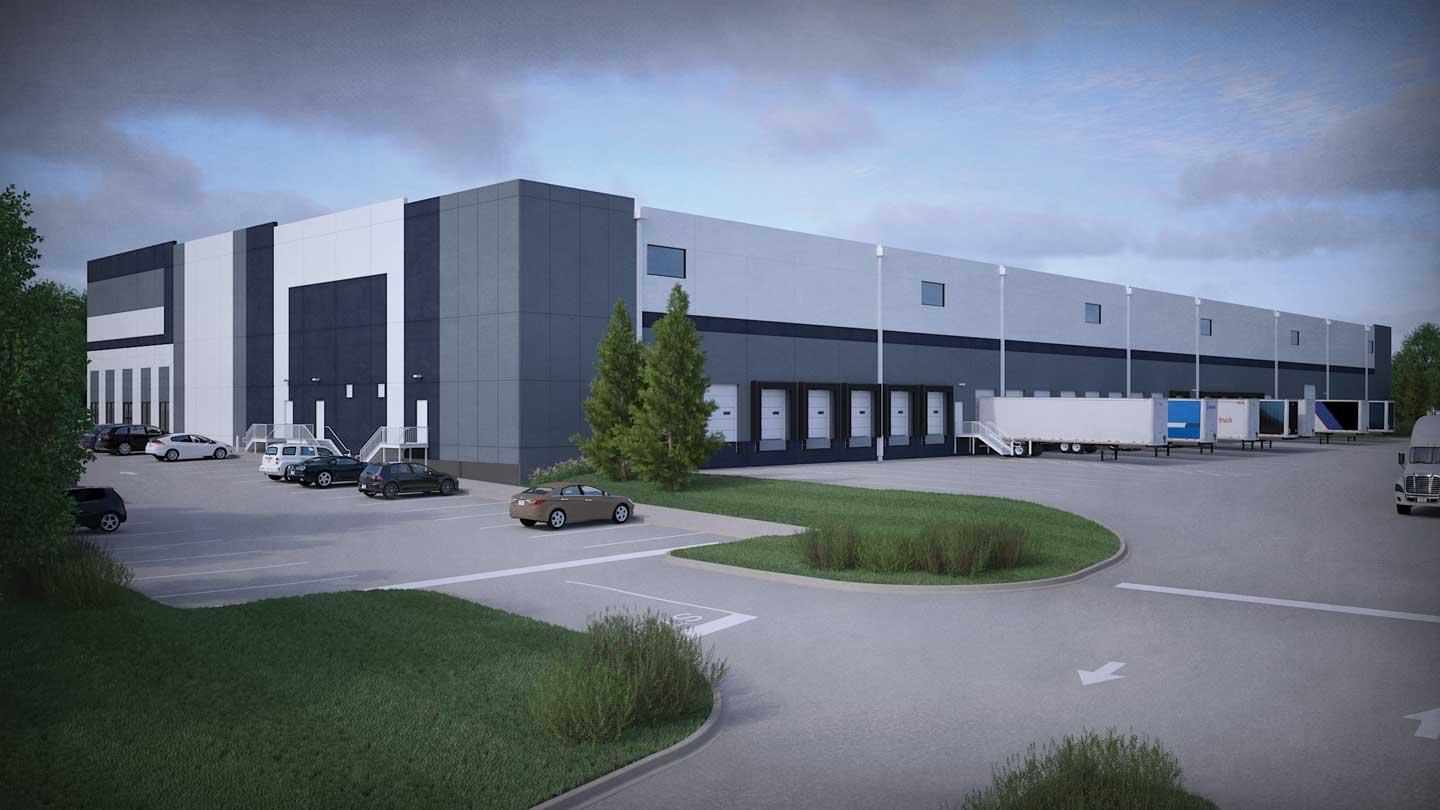
These assets, once viewed as secondary components, are increasingly valued for their resilience across economic cycles.
After two years of recalibration, the U.S. industrial market is finding its footing again, and small-bay assets — sub-100,000-square-foot spaces that are either stand-alone buildings or multitenant suites within a larger property — are at the center of this activity. These spaces often feature dock or grade-level loading and are designed to serve local and regional users.
According to U.S. industrial market statistics for the third quarter of 2025 from Colliers, net absorption across all industrial property types nationwide climbed to nearly 60 million square feet, the strongest quarter since early 2023, while the construction pipeline shrank to 270 million square feet, its smallest since 2018. With limited new supply and a rebound in tenant demand, the next growth phase is shaping up around smaller, more flexible properties.
This shift is particularly apparent in New Jersey. Vacancy stabilized at 7.2% after 10 straight quarters of upticks, while construction activity fell to 7 million square feet statewide, a multiyear low, according to third quarter data from CBRE.
At the same time, leasing activity surged 13% above the five-year average, primarily driven by third-party logistics firms (3PLs) expanding in tighter footprints. In markets such as the Turnpike corridor, smaller assets are leading the Garden State’s recovery.
Developers have delivered fewer spaces measuring less than 100,000 square feet in recent years, with only about 23 million square feet of small-bay assets under construction nationwide, or less than 0.3% of the total industrial stock. New Jersey exemplifies this trend, with most new construction focused on large distribution centers.
As a result, well-located legacy properties have continued to appreciate as demand outpaces availability. Recognizing this imbalance, Greek Real Estate Partners, a fully integrated developer, owner and operator focused on industrial real estate, plans to deliver an 81,156-square-foot industrial project at 130 S. Fairview Road in Ridley Township, Pennsylvania, this spring. The development is designed to meet the growing need for sub-100,000-square-foot spaces, offering modern, efficient options in a market where supply remains scarce.
Why Small-bay Is Winning: Flexibility, Speed, Resilience
Across the country, active tenants are seeking smaller spaces that offer flexibility, speed and proximity to customers. An analysis by CBRE in August found that the average size of the top 100 industrial leases declined year over year, with 3PLs accounting for nearly a third of all activity.
CoStar data confirmed the pattern. In markets such as Tampa, Florida, and Nashville, Tennessee, properties under 50,000 square feet accounted for more than half of all new leases through midyear 2025. These smaller facilities, long considered niche, have become essential infrastructure for local economies.
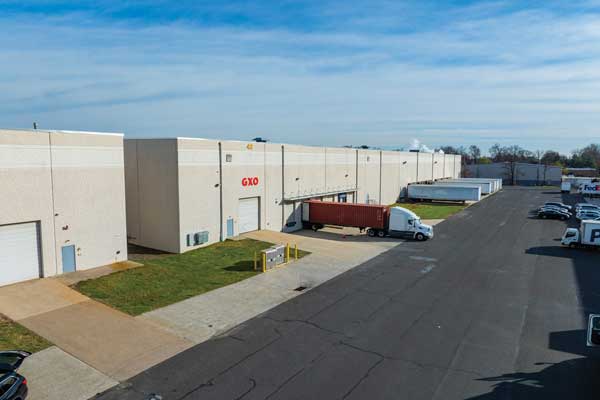
Small-bay properties such as 43 Runway Road within Bristol Industrial Park in Levittown, Pennsylvania, are increasingly viewed as high-performing assets that support the everyday mechanics of regional economies. Courtesy of Greek Real Estate Partners
For developers and owners, that shift is redefining success. Multitenant small-bay assets typically deliver higher rent per square foot, shorter lease terms and quicker mark-to-market potential. Their diversified tenant base — spanning service contractors, light manufacturers, e-commerce operators and building suppliers — also makes them more resilient during downturns.
Investors Reprice Operational Expertise
For years, institutional investors overlooked small-bay assets due to their management intensity. Now, those same qualities have become advantages. Smaller buildings distribute risk, provide consistent cash flow and enable owners to capture rental growth faster. Greek Real Estate Partners has seen how this multitenant agility allows portfolios to outperform in uneven markets. Over the past several years, the firm’s mix has remained largely consistent, with performance driven less by a shift in asset type and more by active leasing, tenant diversification and hands-on management across the small-bay portfolio.
As speculative megaprojects stall, value-add acquisitions and adaptive reuse have become the industry’s dominant strategies. In New Jersey and the Mid-Atlantic, repositioning underutilized small-bay assets can deliver stronger returns than new construction, given high land costs and elongated entitlement timelines.
That same logic is fueling growth in industrial outdoor storage (IOS), a complementary segment gaining institutional attention (see “IOS Market Consolidation Ramps Up”). In October, for example, Blue Owl Capital provided a $150 million loan to Alterra IOS, among the country’s largest investors in outdoor storage, signaling confidence in integrated logistics platforms that combine warehouse and yard operations. This alignment of capital and operating strategy highlights how investors view small-bay and IOS as twin engines of value creation.
The Small-bay Advantage
New Jersey illustrates both the challenges and the many opportunities within industrial logistics.
Entitlement timelines that routinely stretch past two years and elevated pricing that pushes up construction costs have complicated ground-up development. While some new projects are on pause until the economics allow them to advance, there is a significant opportunity to reposition and re-tenant the area’s older small-bay stock.
That scarcity is paying dividends. Savills reported that rents for sub-100,000-square-foot industrial space in core submarkets grew 5% to 8% year over year in the third quarter of 2025, while larger big-box spaces saw flat or declining rents. The result is a market that rewards operational precision and asset-level expertise over scale alone.
Investors are also responding to scarcity by concentrating on assets that demonstrate resilience across economic cycles, a theme reinforced throughout Newmark’s “3Q25 U.S. Industrial Market Conditions and Trends” report. The data shows that private buyers now account for nearly 50% of all industrial acquisition volume, far exceeding their 10-year average and signaling increased conviction in smaller, operationally intensive assets.
At the same time, industrial cap rates have remained stable in the mid-5% range, even as broader commercial real estate pricing adjusts to rate volatility, illustrating ongoing capital demand for well-located, income-durable industrial properties. Notably, Newmark also highlighted that transactions under $100 million represented about 70% of all industrial trades, the highest share in more than a decade. This underscores the extent to which the market has leaned into smaller-scale deals that offer near-term rent growth and manageable capital requirements. These capital flows reinforce the pricing advantage that New Jersey’s small-bay inventory now holds and clarify why competition for functional, well-located sub-100,000-square-foot products has intensified.
The fundamentals point to continued outperformance in the small-bay segment in 2026. Supply remains limited, demand remains local and durable, and investors are rediscovering the strength of hands-on management. As financing costs stabilize and consumer sentiment rebounds, the industrial resurgence will begin from the ground up.
As the market enters a new phase, the challenge for industry leaders will be to apply these lessons with discipline. The next cycle will reward those who can identify infill locations with durable tenant demand, anticipate operational needs through flexible design, and navigate entitlement and redevelopment timelines with precision. It will also require a more nuanced understanding of tenant industries, capital structures and local infrastructure constraints, particularly as supply chain strategies evolve and cost pressures remain unpredictable. For developers and investors willing to embrace the granular work of managing and modernizing small-bay industrial assets, the opportunities are considerable.
These properties are no longer viewed as secondary components of the industrial landscape but as strategic, high-performing assets that support the everyday mechanics of regional economies. In a period defined by macrolevel uncertainty and microlevel resilience, small-bay facilities offer a path forward that is grounded in practicality, adaptability and long-term value creation.
David Greek is managing partner, Greek Real Estate Partners.