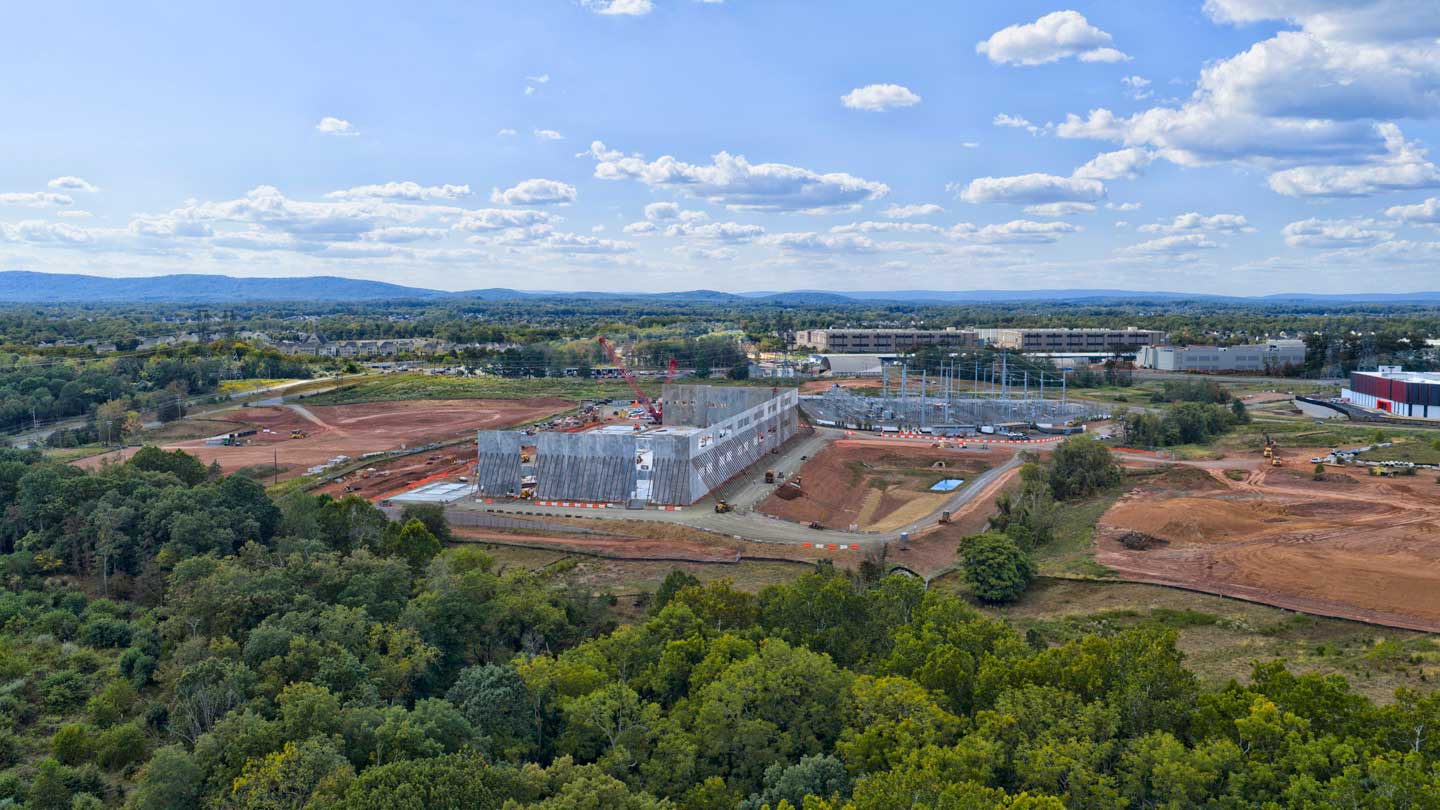
Report examines how developers are addressing immediate and long-term concerns.
Prior to 2022, real estate companies that engaged in new data center development usually focused on the colocation and enterprise markets, while the largest data center occupiers (information technology firms like Amazon, Google and Microsoft) directly financed and owned their own hyperscale facilities. Hyperscalers could tailor these data centers to their computing needs and cloud service offerings, allowing them to operate more efficiently than was possible in colocation facilities. Leading up to 2022, many of these firms also made significant investments in environmental sustainability initiatives that would lower the carbon footprint of their data center operations, helping them to improve their public image and access capital from sustainability-oriented investors.
This dynamic changed with the market introduction of generative artificial intelligence powered by large language models like Chat GPT. Incumbent hyperscalers and new AI startups began to pour money into securing the data center capacity required to develop and improve generative AI models as demand from traditional sources like cloud computing continued to grow. The resulting surge in demand for data centers has far eclipsed earlier trends, creating more opportunities for commercial real estate developers to serve both the hyperscale and colocation markets through build-to-suit and speculative projects. However, the sudden escalation of data center development has also led to increasing concerns that their power and water consumption may jeopardize development approvals and electric power for new projects. And while many data center occupiers have recently downplayed or deferred their carbon reduction goals, this trend could reverse within the next decade, creating a competitive advantage for data centers that can be powered by low-carbon or carbon-free electricity.
The NAIOP Research Foundation’s January 2026 report, “Managing Sustainability Risk in Data Center Development,” examines strategies that developers can pursue to address local communities’ concerns about new data centers and prepare for future market and regulatory conditions that could impair returns for less sustainable buildings. The report’s authors, Jeremy Gabe, Ph.D., and Phil Isaak, interviewed investors, developers, colocation and hyperscale tenants, architects, engineers, energy companies and others to identify current and expected sustainability-related challenges for new data center projects and how developers are approaching them.
For those not already familiar with the data center market, the report provides an overview of the lease terms that currently incentivize investment in energy efficiency. It also describes options, such as power purchase agreements, that hyperscalers and other data center operators have started pursuing to secure low-carbon or carbon-free power from the grid. Utility-provided electric power of any kind has grown increasingly scarce for large projects. Many developers are exploring on-site “behind the meter” generation options to avoid lengthy delays in securing electricity from the grid. This strategy is usually more expensive than utility-generated electricity and involves large capital investments in on-site generation. Since data centers require large volumes of round-the-clock base load electricity, developers currently have few options for low-carbon on-site generation that can fully meet a project’s electricity requirements.
The report outlines various strategies that developers are pursuing to secure power now while preparing for a possible future in which facilities transition to low-carbon energy sources. Options for on-site generation include installing hydrogen fuel cells or combined-cycle gas generators that draw their fuel directly or indirectly from natural gas. These can serve as a bridge to a future in which power is provided by green energy sourced from the grid, small modular nuclear reactors, fuel cells supplied with green hydrogen or on-site gas generators equipped for carbon sequestration. Alternatively, developers that don’t want to take a risk on building on-site generation may consider partnering with local utilities to finance new renewable electricity generation.
The Research Foundation report also explores the more immediate power, water and social sustainability concerns that increasingly shape data center project approvals. It provides an overview of the trade-offs in power and water efficiency between different types of cooling infrastructure and the factors that affect their suitability in different environments. This includes examining how developers are approaching the increasing use of liquid cooling for the most energy-intensive IT equipment. The authors also provide suggestions for how developers can proactively address community concerns about data centers’ noise and appearance and their contribution to local tax revenues.
Access the report at naiop.org/datacentersustainability.
Shawn Moura, Ph.D., is executive director of the NAIOP Research Foundation.