The Swig Company shares what decarbonization looks like in practice across its bicoastal portfolio.
Founded in 1936, the privately held Swig Company has consistently operated at the intersection of long-term ownership, disciplined asset management and evolving market expectations. With more than 6 million square feet of primarily office properties spanning San Francisco, Los Angeles, Seattle and New York City — including legacy towers in San Francisco’s Financial District and historic assets in Midtown Manhattan — the portfolio reflects both architectural permanence and operational complexity.
That history matters. Decarbonizing commercial real estate is not a clean-slate exercise. It requires working within existing building systems, regulatory frameworks, utility constraints and capital structures — often simultaneously. For Swig, sustainability has not been treated as a parallel initiative or branding exercise but rather as an operational challenge to be solved with the same rigor applied to leasing, capital planning and risk management.

The Swig Company has continuously owned, operated and updated San Francisco’s iconic Mills Building since 1954. It began powering the office destination with 100% renewable electricity in 2025. Courtesy of The Swig Company
In 2023, The Swig Company formally announced a significant commitment to environmental sustainability across its managed portfolio. The company set ambitious goals to achieve a 50% reduction in Scope 1 and Scope 2 carbon emissions by 2030, with the ultimate objective of reaching net-zero emissions by 2040.
“The Swig Company is committed to greenhouse gas reduction targets aligned with the Paris Agreement’s urgent call to action to limit global warming by achieving net-zero emissions before 2040,” said Connor Kidd, the company’s president and CEO. “We made the decision after achieving three consecutive years of sustainability reporting, improving our portfolio performance, and with support from the board of directors and Swig family.”
Following this commitment, decarbonization road maps were prepared for four properties within its managed portfolio in 2024, with a fifth in 2025. In 2026, the company will extend this initiative by developing road maps for two additional properties. These road maps uncover key building-level efficiency and electrification measures necessary to meet Swig’s carbon reduction targets.
In 2024, through energy efficiency measures such as LED lighting and direct digital control upgrades, Swig achieved a portfolio-wide 16% reduction in like-for-like total energy consumption from 2018 and a 27% reduction in like-for-like greenhouse gas emissions intensity.
While improving efficiency and electrification at the building level are essential steps, they alone are not enough to reach net zero in commercial office real estate. In Swig’s situation, carrying out all identified energy efficiency measures would decrease its energy use intensity by around 40%.
For existing assets, the carbon intensity of the utility grid ultimately determines whether operational improvements translate into real emissions reductions, making access to clean power a foundational constraint, not a secondary consideration. For Swig’s five road-mapped properties, a decarbonized grid would cut energy use intensity by about 47%.
As pressure to decarbonize accelerates — from municipal regulation, tenant requirements and investor scrutiny — Swig’s experience offers a practical case study in how building owners can move forward without losing sight of financial performance, timing and regional realities.
Regulation as a Catalyst, Not a Strategy
In markets such as San Francisco and New York City, building decarbonization is no longer discretionary. San Francisco’s renewable energy ordinance for existing commercial buildings requires large office properties to transition to 100% renewable electricity, with escalating milestones and a target of zero greenhouse gas emissions by 2035. New York City has similarly established carbon caps and performance standards for large buildings. These regulations assume continued progress in grid decarbonization and the availability of workable utility programs. Where utilities provide credible, cost-effective pathways, compliance is achievable; where they do not, building owners encounter structural limitations that policy alone cannot overcome.
Local Law 97 is a key component of New York City’s Climate Mobilization Act, enacted in 2019 to address greenhouse gas emissions from large buildings. The law sets annual emissions limits for properties over 25,000 square feet, with increasingly stringent targets phased in over time. Owners must track and report building emissions, and noncompliance can result in significant financial penalties. The regulation is designed to drive operational changes, retrofits and energy efficiency upgrades, all within the practical constraints of existing building systems and tenant needs.
At the state level, California’s Renewable Portfolio Standards (RPS) have steadily raised the baseline for all electricity providers. The mandate increased from 33% renewable energy in 2020 to 44% by 2024, with a requirement of 60% by 2030 and a long-term goal of 100% carbon-free electricity by 2045 under SB 100. California’s AB 802, which became effective in 2016, requires benchmarking for commercial and multifamily buildings over 50,000 square feet to report annual energy usage via Energy Star Portfolio Manager. Under AB 2208, commercial buildings are required to implement energy efficiency measures, including LED lighting retrofits.
These policies establish direction, but they do not dictate execution. How owners meet these requirements, and at what cost, depends heavily on utility structures, procurement pathways and regional market dynamics.
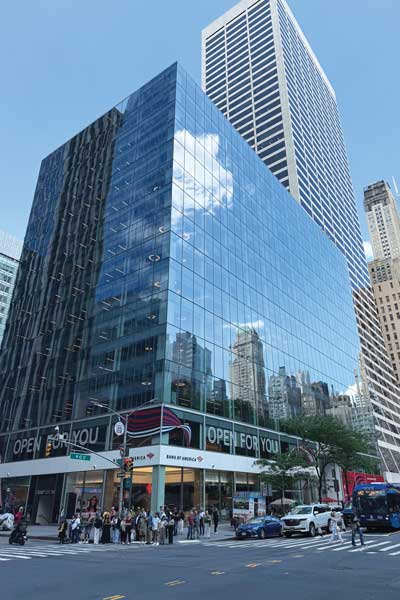
The Swig Company repositioned 2 Bryant Park, formerly known as 1100 Avenue of the Americas, into a Class A boutique office building with modern amenities and building systems. It offers views of New York City’s Bryant Park and easy access to Penn Station and Grand Central Terminal. Courtesy of The Swig Company
“We have been proactively benchmarking for some time across our entire portfolio, and as building owner-operators, we welcome the opportunity to work with local utilities to find ways to expand the availability of lower cost clean power,” said Will Sandman, executive vice president, director of asset management at The Swig Company.
Direct Access in California: Flexibility With Trade-offs
One of the primary tools available to large commercial customers in California and other states is the Direct Access program. Established under AB 1890, the program allows customers to purchase electricity generation from an energy service provider while continuing to receive transmission and distribution service from the local investor-owned utility.
For Swig, Direct Access has offered greater control over energy sourcing, contract terms and long-term price certainty, which is particularly valuable in periods of market volatility. However, it is also among the most expensive ways to currently procure 100% renewable electricity in California, even though all providers are subject to the same RPS requirements.
Several structural factors drive this cost differential.
First, Direct Access customers are assessed the power charge indifference adjustment (PCIA), an exit fee designed to ensure remaining utility customers are not burdened with legacy power contracts procured on behalf of departing load. While conceptually neutral, PCIA charges are market-based and can materially increase the total cost of service for Direct Access customers, even when generation rates appear competitive.
Second, procurement strategies differ. Investor-owned utilities and Community Choice Aggregators often benefit from economies of scale and long-term renewable power purchase agreements executed when prices were lower. Direct Access providers typically operate with smaller portfolios and may rely more heavily on open-market renewable energy certificates, which are subject to price volatility as demand increases.
Third, resource adequacy requirements, mandated by the California Public Utilities Commission, have become increasingly expensive as dispatchable capacity tightens. Direct Access providers must procure this capacity independently, passing higher marginal costs directly through to customers.
The result is a pathway that offers certainty and customization but not necessarily cost savings. For owners, Direct Access is a useful tool — but one that must be evaluated carefully against building economics, lease structures and capital timelines.
From Incremental Progress to Intentional Strategy
Swig’s renewable journey did not begin with a single mandate or initiative. Early gains were incremental and operationally driven. In 2020, the company reported a 22% reduction in total energy consumption and a 27% reduction in greenhouse gas emissions year over year. While pandemic-related occupancy reductions contributed, increased renewable content in grid electricity also played a meaningful role.
By 2023, Swig transitioned from opportunistic improvements to deliberate strategy. The company committed to powering select San Francisco properties with 100% renewable electricity in alignment with local requirements. That commitment became operational reality in 2024 at 369 Pine St., 501 Second St. and 633 Folsom St. in San Francisco, and 444 Castro St. in Mountain View. This was followed by the Mills Building in 2025.
Throughout this process, renewable procurement was paired with aggressive energy efficiency measures to reduce overall demand before layering on higher cost green supply.
Energy Efficiency: The First and Most Reliable Lever
Energy efficiency remains the most immediate and cost-effective tool available to building owners (and in California, it is also mandatory under AB 2208). Swig implemented portfolio-wide LED lighting retrofits, reducing electricity consumption while improving lighting quality and tenant experience.
On-bill financing proved essential in overcoming capital constraints. By allowing project costs to be repaid through realized energy savings, on-bill financing aligned efficiency investments with operating budgets rather than competing directly with other capital priorities.
Reducing load up-front improved the economics of renewable procurement and created a more resilient foundation for long-term decarbonization.
East Coast Execution: Partnership as Strategy
On the East Coast, Swig’s approach has leaned more heavily on partnership to navigate a different regulatory and utility landscape. A notable collaboration with Brookfield enabled Swig to accelerate renewable adoption across two New York City properties.
Brookfield’s expertise in renewable procurement — including hydropower and renewable energy credits — complemented Swig’s operational knowledge and portfolio strategy. The partnership streamlined implementation, reduced execution risk and delivered measurable progress toward portfolio-wide emissions reduction goals.
This experience reinforced an important lesson: Decarbonization at scale is rarely a solo effort. Strategic partnerships can shorten learning curves, unlock specialized expertise and enable owners to move faster without overextending internal resources.
Embedding Sustainability at Acquisition
Since 2022, Swig’s acquisitions team has applied an ESG checklist to evaluate renewable energy and efficiency potential at the point of purchase. Assets such as Colina Apartments in Seattle, acquired with existing rooftop solar, and 3130 Wilshire in Santa Monica, California, with future solar carport potential, illustrate how sustainability considerations inform long-term asset planning.
“These factors do not override underwriting fundamentals, but they meaningfully influence capital planning, risk assessment and future optionality,” said Stephanie Ting, executive vice president, director of investments at Swig.
Southern California: When Timing Protects NOI
In Southern California, Swig evaluated a major office asset where transitioning to 100% green electricity through the local utility would have increased operating expenses by nearly 8%. With post-pandemic occupancy at approximately 60%, those costs would have directly reduced net operating income.
With a loan maturity approaching, preserving NOI for refinancing was critical. Rather than forcing an immediate transition, Swig engaged decarbonization consultants to model a long-term road map. The recommendation: Complete all planned energy efficiency measures, deferred maintenance and on-site solar installations first, then transition to 100% green power around 2033.

The interior of the Mills Building, located in San Francisco’s Financial District. Courtesy of The Swig Company
This sequencing balances environmental progress with financial stewardship, reducing total demand before adopting higher-cost renewable supply. Additionally, this scenario illustrates a broader industry challenge: Until clean grid power is both widely available and competitively priced, the pace of decarbonization in many commercial markets will remain constrained by economics rather than intent.
Washington State: Performance Standards as Asset Discipline
Washington’s Clean Building Performance Standards (CBPS) represent one of the more rigorous, performance-based approaches to improving energy efficiency in the commercial real estate sector. Rather than prescribing specific technologies, the program sets mandatory energy performance targets for large commercial buildings and requires owners to benchmark, report and progressively improve energy use over time. Compliance thresholds and timelines vary by building type, but the intent is consistent: Reduce emissions, control operating costs and protect long-term asset value.
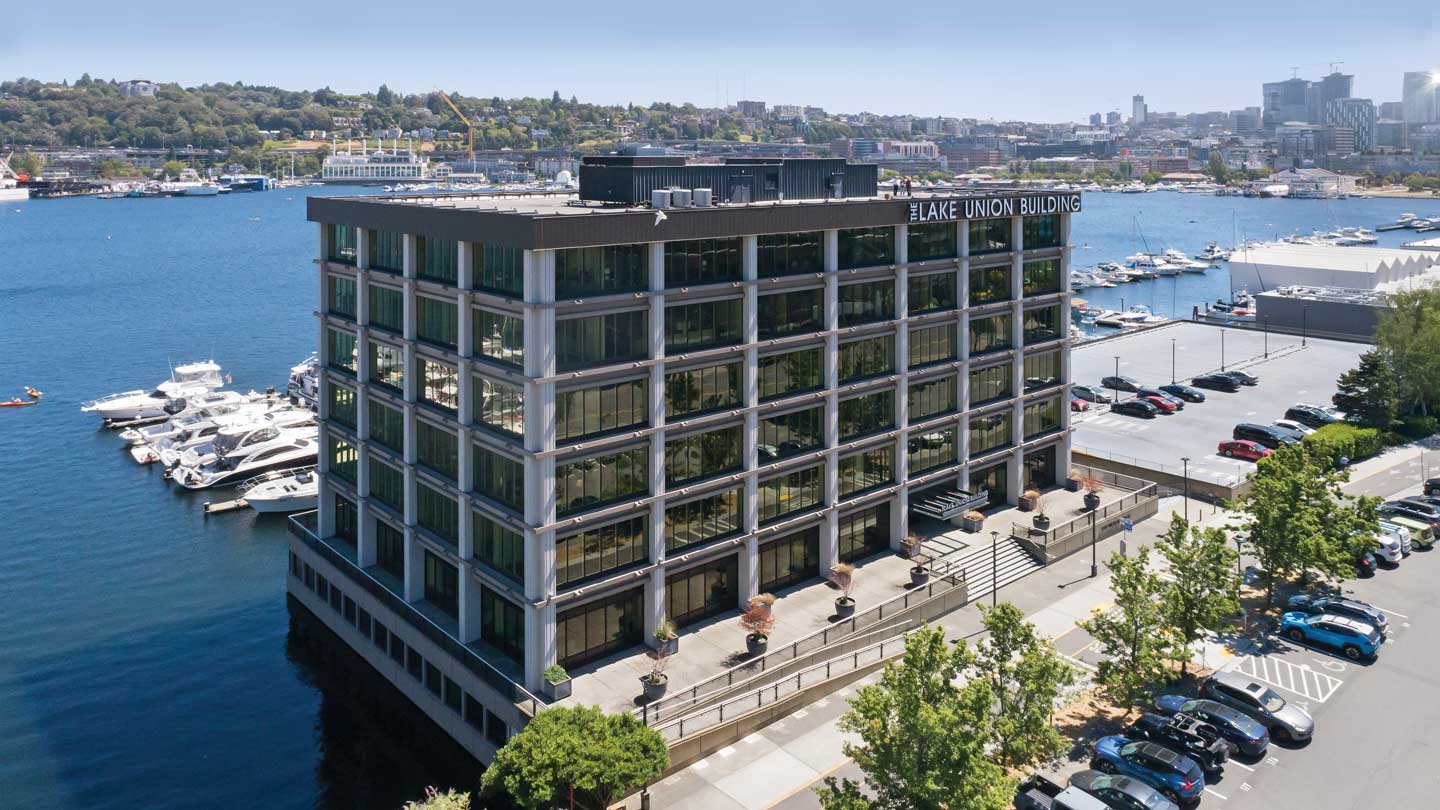
At the Lake Union Building, a seven-story office property offering 90,952 square feet of space, this framework has reinforced the importance of disciplined energy management. The property recently received its first certified benchmarking report, confirming a weather-normalized energy use intensity of 57.1 — just below the compliance threshold of 57.2 established under Washington’s commercial CBPS for the building type. While the margin is narrow, the result confirms that the building currently meets the state’s efficiency requirement and provides a verified baseline from which to plan future improvements.
Meeting the standard is not the endpoint. Washington’s CBPS program is designed to drive continuous improvement, with ongoing reporting and tightening performance expectations over time. Remaining below the energy use intensity threshold helps manage operating costs and emissions today, but it also signals where additional efficiency investments will be required to maintain compliance in future cycles.
To that end, Swig will be focused in the coming years on targeted efficiency measures that build on the property’s current performance. By integrating these strategies well ahead of future deadlines, the goal is to preserve compliance flexibility, reduce long-term energy costs, and strengthen the durability and value of the Lake Union Building over time.
Progress Requires Balance
Decarbonizing commercial real estate is not about achieving absolutes; rather, it is deeply intertwined with the ongoing evolution of the electric grid. While building owners can take significant steps to reduce energy loads and electrify systems, the broader impact of these efforts ultimately depends on the pace and scope of grid decarbonization.
By taking a phased approach to investments, fostering strategic partnerships and staying responsive to shifting market conditions, building owners can meaningfully reduce emissions while safeguarding asset performance.
For policymakers and utilities, this highlights a shared responsibility. Accelerating the decarbonization of the grid and driving down energy costs are not just environmental goals — they are essential for enabling sustainable, large-scale progress toward net zero in commercial real estate. It is this pursuit of balance — not perfection — that empowers both owners and the industry as a whole to achieve scalable, enduring decarbonization.
Kairee Tann, LEED AP, is senior vice president, director of innovation and community impact at The Swig Company.
Lessons for Owners and OperatorsSwig’s experience suggests several practical takeaways:
|
The Swig Company National Portfolio18 properties (inclusive of wholly owned and partner buildings) New York |