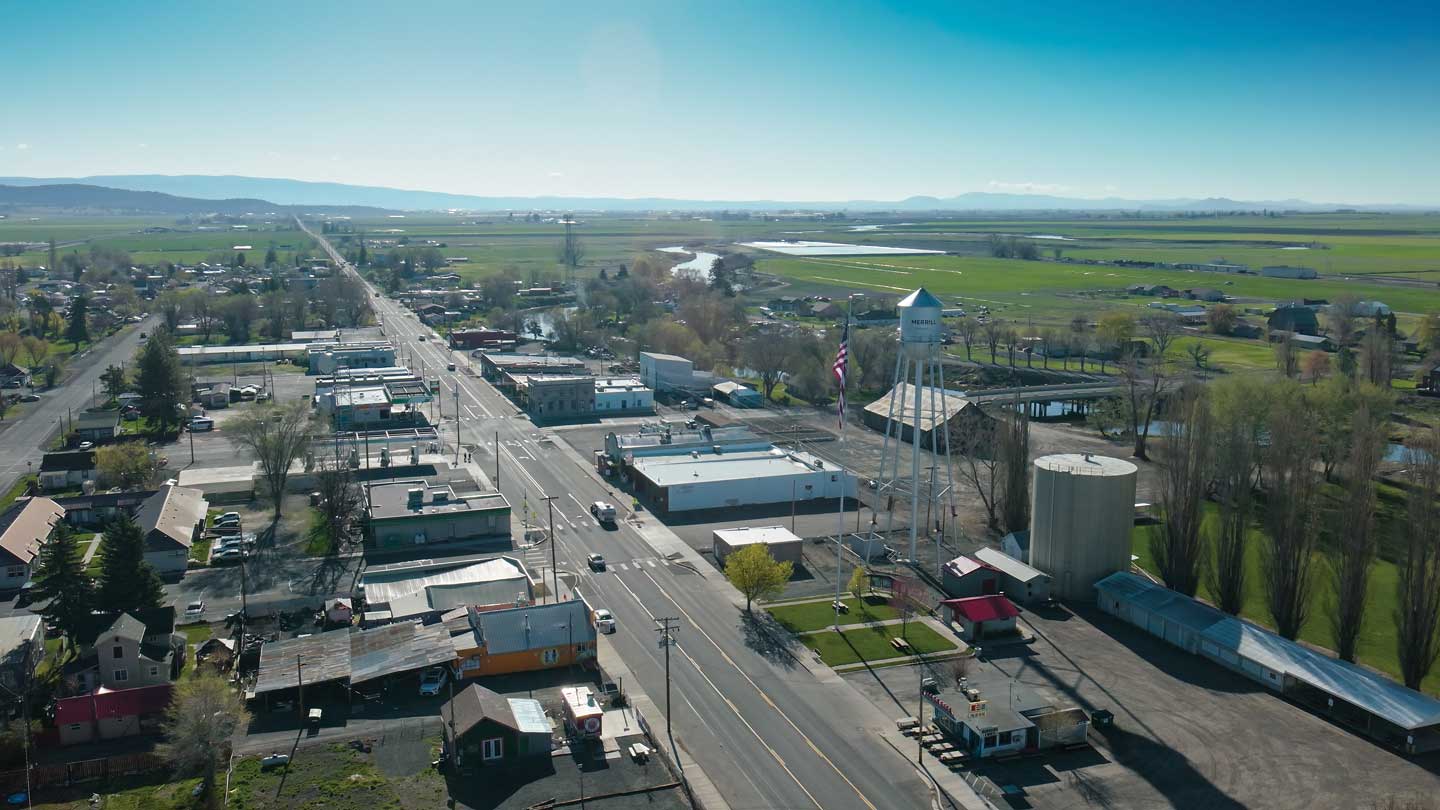
Upcoming opportunities will be available to stack incentives for developments in underserved markets.
The Trump administration’s tariff policies have created global uncertainty for businesses across industries, including commercial real estate. But opportunity zone (OZ) tax incentives, made permanent last summer by the One Big Beautiful Bill Act, could be just as effective and help offset rising costs. For that matter, the extension of OZs and other programs like new markets tax credits (NMTCs) may reshape commercial real estate development and unlock profits in locations many investors previously overlooked.
The ever-present threat of tariffs is spurring some developers to explore investments in less economically advantaged areas, particularly in underserved and rural markets where land costs are lower and federal incentives can significantly enhance returns. The key is understanding how to stack these incentives to maximize returns.
A Complementary Framework
The first step requires understanding the incentives themselves. The NMTC program, which began in 2000, provides a 39% tax credit spread over seven years for investments made in qualified low-income communities. Since its inception, it has awarded $81 billion in tax credit authority through 1,667 allocations.
OZs emerged from the 2017 Tax Cuts and Jobs Act, enabling investors to defer capital gains taxes by reinvesting in qualified opportunity funds (QOFs) that deploy that money in economically distressed areas. Currently, if the QOF investment is held for at least 10 years, gains earned from its appreciation may be excluded from future taxation. More than $42 billion has been invested in OZs since the program began, according to Novogradac, which tracks QOFs.
These programs complement each other. The funds generated by NMTCs can help fund up-front costs ranging from land acquisition to construction — bridging financing gaps in some cases — while OZs provide long-term tax benefits by allowing investors to defer capital gains on their initial investment and exclude gains from appreciation if held for 10 years or more.
New tariff policies are likely to further encourage developers to take advantage of the combined incentives between these programs. The rising interest in domestic production has created opportunities for manufacturing facilities in rural areas that NMTCs and OZs can help finance through cost reductions. The current market trend supports projects that match national goals for job creation and infrastructure development while offering high investment returns.
Project Examples
In 2022, the Tillamook County Creamery Association in Decatur, Illinois, obtained NMTC funding for a $74 million ice cream manufacturing plant located in an OZ. The project also received $7 million in NMTCs for initial construction costs and equipment purchases. These programs minimized project financial risks and brought private investment into a neighborhood where poverty levels reached 20%. Once completed, the facility brought 70 jobs to the area while encouraging future investment.
Similarly, the Pit River Tribe in Northern California created a nonprofit health care foundation and used NMTCs to build a federally qualified health center. The $11.75 million NMTC funding leveraged $14 million in U.S. Department of Agriculture and construction lending funds to create a $25 million piece of much-needed rural health care infrastructure.
Since 2011, General Communications, Inc. has used more than $220 million in NMTC allocation to finance construction of broadband connectivity in Alaska Native communities. These projects have made high-speed internet available to thousands of rural households, solving vital infrastructure deficiencies and enabling better telehealth and educational services.
As these projects demonstrate, the use of NMTCs, along with permanent OZs, presents commercial real estate developers with an attractive investment possibility in underserved U.S. markets. Greater industry awareness of each program — and how they can be combined to increase project profitability — should help developers navigate fluctuating costs and make investments in the communities that stand to benefit most.
Encouraging Rural Investment
The new, permanent version of the OZ program will result in fewer qualifying zones, which will likely result in fewer deals getting done. It is also more likely that the deals will benefit communities deeply in need as opposed to communities that are already gentrifying. The extension will encourage rural investment, and it tightens some requirements, making the program more difficult to misuse. One drawback is that the real changes do not begin until 2027.
Recent guidance from the U.S. Department of the Treasury and the IRS provided a listing of the census tracts that meet the criteria for being rural for amounts invested in QOFs after Dec. 31, 2026. However, qualifying census tracts have not been identified yet. Nominations for qualifying tracts can be made by states’ governors beginning July 1, 2026. After their staffs review the nominations, each state’s governor will certify qualifying tracts by Jan. 1, 2027. Hence, many of the census tracts listed in the notice may not ultimately qualify for OZ status.
Once the designations are made, several accounting firms, such as CohnReznick, Novogradac and Baker Tilly, will maintain unofficial interactive maps that allow interested parties to input addresses or coordinates to determine if a property is in a qualified census tract, regardless of whether it is rural.
Darryl Jacobs is a co-founder and partner of Chicago-based law firm Ginsberg Jacobs LLC.