Firms willing to confront the challenges posed by brownfields also find opportunities to create long-term value.
The industrial real estate landscape is evolving, especially in the wake of changing consumer demands, higher interest rates and tariffs throughout the past year’s market cycle. As consumer needs shift, developers are focusing on high-demand areas near population centers that provide logistical advantages. A key driver of this trend is the meteoric rise of e-commerce, which requires faster and more localized distribution centers.
With that shift comes a new set of challenges. Densely populated regions often present environmental hurdles resulting from past commercial and industrial operations. These complexities can have a direct impact on site selection, design, entitlements, costs and community perception. As demand for smaller, strategically located infill sites grows, so does the likelihood of encountering environmental risk, requiring a deeper understanding of these challenges from a developer’s perspective.
Because of this shift in market demand, Stonemont Financial Group, a private firm specializing in industrial real estate investments, is seeing over 90% of its active targets come with environmental complexities related to historical land use and urban infill locations. However, that complexity can lead to opportunity for industrial developers when managed successfully.
Stonemont has learned firsthand that redevelopment of urban infill sites often requires strategic prepurchase due diligence, careful underwriting and planning, and creative cleanup strategies. Although these sites require additional work, their advantageous locations near core urban markets often make it worthwhile to put in the extra effort.
Stonemont conducts a strategic and layered approach to determine if a potentially impacted project is worthwhile. It first evaluates the site’s history and any site-specific conditions that increase or decrease potential environmental risk, including nearby property uses or ecological features. It also considers the environmental regulatory framework and incentives in the state in which the project is located. Targeted environmental sampling is sometimes necessary to better understand the environmental conditions and risks associated with the project.
Armed with this data, Stonemont next evaluates the approach, time and cost to obtain regulatory closure for any environmental issues; how the environmental conditions may impact the project’s design, construction schedule and budget; and whether the conditions affect Stonemont’s ability to obtain financing for the project.
Stonemont Passaic Logistics Center
Development varies across regions. For example, many properties in northern New Jersey have long industrial histories that have left behind soil and groundwater impacts. Most of these sites are classified as brownfields and are abandoned, idle or underutilized due to environmental contamination.
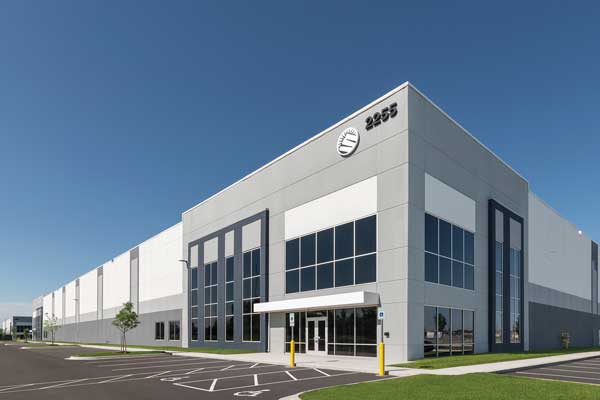
That was the case with Stonemont’s Passaic Logistics Center, a site that formerly sat as an abandoned and derelict lot after years of previous heavy industrial use. Stonemont acquired the land for $60 million in 2023 to build a 300,000-square-foot logistics center, completed in January 2025. The project is the result of a public-private partnership between Stonemont and the city of Passaic, which deemed the area in need of redevelopment and approved it as an urban renewal redevelopment project, opening the way for tax benefits. It was crucial that both groups worked seamlessly together to reimagine an aging property into a new hub for economic development.
New Jersey has some of the strictest and most frequently updated environmental regulations in the U.S., particularly around emerging contaminants such as PFAS (perfluoroalkyl and polyfluoroalkyl substances). This makes the state’s environmental regulatory landscape particularly challenging for developers.
Passaic Logistics Center faced inevitable hurdles, including excavation and off-site disposal of impacted soils and asbestos-containing materials, groundwater cleanup, long-term monitoring and vapor intrusion mitigation. Over the course of a year, Stonemont spent seven figures securing approvals from local agencies, continued to navigate New Jersey’s Industrial Site Recovery Act (ISRA) process and completed substantial cleanup activities. The former involved formulating a remediation plan after thorough site investigations before any transactions were completed. Stonemont is one of the few industrial developers to complete a project of this complexity within the planned project timeline and within terms of ISRA in the last two years.
Castings Commerce Park, an 862,000-square-foot Class A distribution center in Columbus, Ohio, was redeveloped on the site of the former Buckeye Steel Castings facility that was active for more than a century. Courtesy of Stonemont Financial Group
Leasing momentum continues at Passaic, with notable prospects being drawn to the strong labor force, nearby proximity to the largest metropolitan area in the country and the logistics center’s appealing design.
Castings Commerce Park
In Columbus, Ohio, Stonemont developed Castings Commerce Park, a 70-acre, 862,000-square-foot Class A distribution center consisting of three buildings on the site of the former Buckeye Steel Castings facility. Over decades of industrial activity, materials such as steel, sand, petroleum products, paints and other chemicals were used and stored on-site. The property, active for more than a century, was shut down and demolished in 2016.
Recognizing the site’s redevelopment potential, the property was enrolled in Ohio’s Voluntary Action Program (VAP), a state-led initiative for cleaning up historical contamination sites. VAP required environmental assessments, cleanup planning, and safety measures such as soil caps and land use restrictions. The overall cleanup, which required a significant investment and took several years to complete, included soil management measures in conjunction with the project’s development. As part of the cleanup approach, a 1.25-acre area of lead-impacted soil was capped and left in place rather than excavated and removed from the site.
Following these efforts, a “no further action” letter was issued by the certified environmental consultant. Stonemont continues to follow long-term operations and maintenance plans to ensure the site remains protective of the environment.
The Ohio Environmental Protection Agency then issued a covenant not to sue for the site’s past impacts and unlocked more than $7 million in eligible tax incentives and grant funding, including JobsOhio’s Ohio Site Inventory Program, the Ohio Department of Development demolition and revitalization grant, the Franklin County port authority sales tax exemption and a city of Columbus tax abatement. Through a careful balance of environmental remediation, public-private partnerships and strategic investment, Stonemont successfully transformed a long-dormant industrial site into a modern logistics hub, further revitalizing a key piece of Columbus’ industrial landscape. Following its completion in late 2023, Castings Commerce Park has exceeded leasing expectations, with several notable signings occupying 232,477 square feet of the development as of August 2025.
Chamblee International Logistics Center
In February 2024, Stonemont and a development partner, Seven Oaks Company, completed Chamblee International Logistics Center, a four-building, 236,000-square-foot infill industrial project in Georgia. This area is heavily constrained, and new development opportunities inside the Atlanta perimeter are rare.
During Stonemont’s prepurchase due diligence process, chlorinated solvent contaminants were discovered arising from surrounding commercial and industrial operations, such as a previously existing dry-cleaning facility near the property. Based on the environmental conditions, Stonemont enrolled the Chamblee site in the Georgia Brownfield Program. In partnership with Seven Oaks Company, Stonemont completed the Georgia brownfield process in less than two years and obtained a final limitation of liability letter from the Georgia Environmental Protection Division. Stonemont was also able to take advantage of a property tax abatement afforded to brownfield participants in the amount of its environmental costs.
By navigating the environmental and administrative process, Stonemont succeeded in bringing much-needed industrial space to a high-demand submarket, unlocking value others might have overlooked. Stonemont has since sold the property, which was 68% leased to five tenants at the time of sale.
Environmental Complexity Is the New Norm
Environmental complexity is no longer an exception but rather the expectation. For industrial developers, managing these challenges is now a core competency.
When evaluating whether a brownfield site is worth pursuing for redevelopment, it is wise to create a comprehensive assessment of both risks and opportunities. Key considerations include the site’s environmental condition and the scope of required remediation, as well as location factors such as access to major transportation corridors, proximity to workforce populations and compatibility with surrounding land uses. Developers should also weigh infrastructure availability, as well as potential incentives offered through local, state or federal brownfield programs.
It is best practice to engage environmental consultants early to identify any regulatory hurdles and develop realistic cleanup cost estimates. Equally important is building strong partnerships with municipalities, as local support can streamline entitlements and unlock funding sources. Stonemont’s lessons learned from past projects underscore the value of patience, thorough due diligence and a collaborative approach to transforming underutilized properties into productive, market-ready assets.
Whether leveraging public-private partnerships, targeted remediation strategies or innovative insurance and incentive structures, firms that proactively embrace environmental complexities are best positioned to deliver transformative projects and create long-term value in their communities.
Brian Danahy is vice president, development/acquisitions at Stonemont Financial Group.