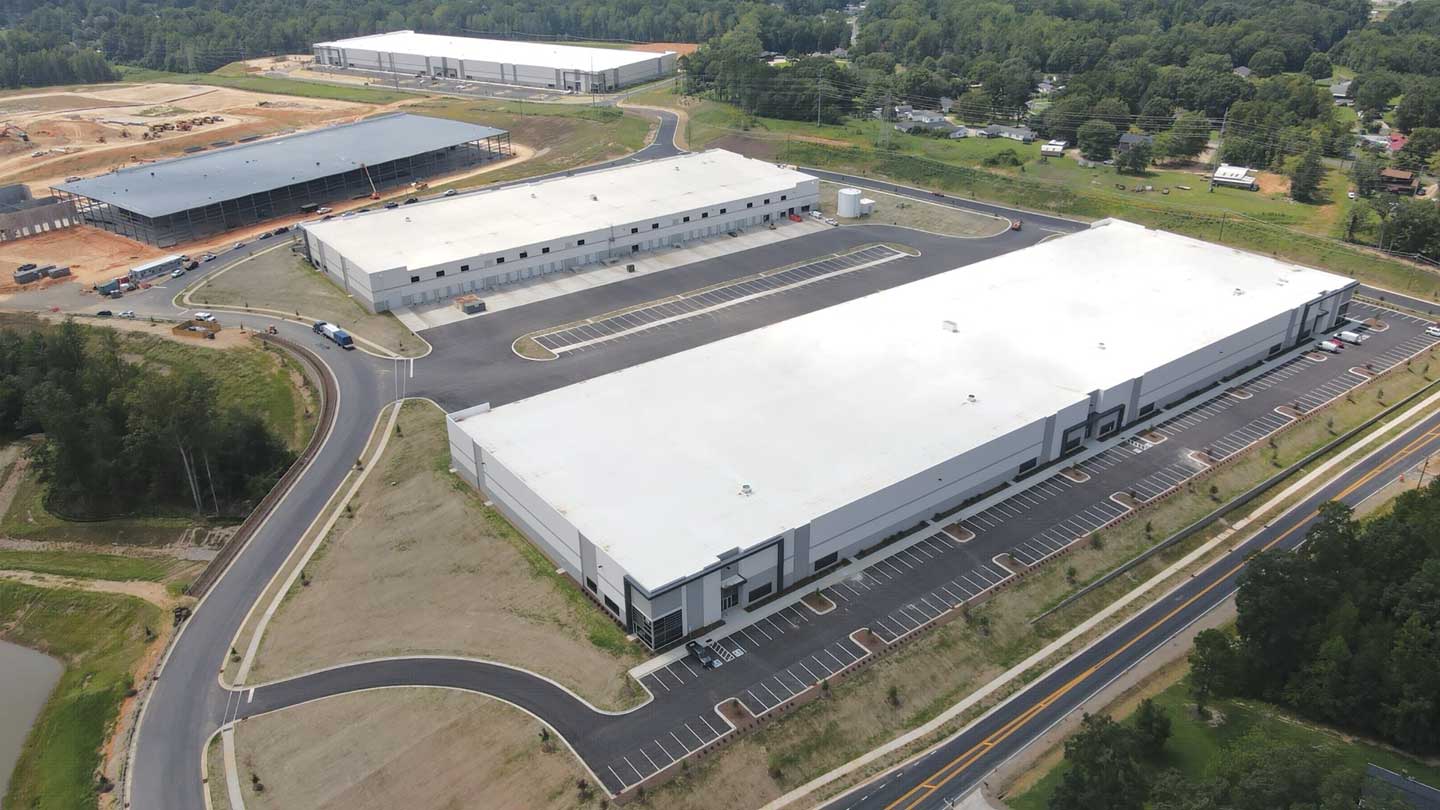
The early involvement of preconstruction teams can reduce risk and enhance flexibility for developers.
Site selection has always been a nuanced process, but the current market has introduced several newer pressures. Escalating land prices, limited inventory, and stricter environmental and permitting requirements have intensified the risks and narrowed the margin for what makes a site viable.
Too often, these risks emerge only after a site is secured and plans are in motion, when solving for them becomes far more costly. It is advisable to involve preconstruction teams as early as possible, not just to evaluate how to build on a site but for help in determining whether a site can support a project that pencils out.
Early evaluation of subsurface conditions, the use of adaptable building strategies and stakeholder coordination can help developers mitigate risk and strengthen long-term project viability before the first shovel enters the ground.
Why Subsurface Conditions Can Make or Break a Site
Some of the costliest development risks are hidden underground. Conditions like unstable soils, buried rock or limited utility access can drive up sitework costs, delay construction or render a project unbuildable without major redesign.
Yet these risks are often discovered after plans are already underway. Treating geotechnical evaluation as an early investment — not just a technical requirement — can prevent costly surprises and help developers determine whether a site truly supports their goals. The cost of a geotechnical evaluation will range depending on site size, but a good baseline for a typical industrial project is $15,000 to $30,000.
Early insight into subsurface conditions recently helped turn a financially unworkable plan into a viable phased development in Landis, North Carolina. The original layout called for three industrial warehouse buildings, including one large facility placed atop a steep grade change and significant areas of underground rock. Executing that plan would have required substantial blasting and fill to level the site, adding millions in development costs and putting the project’s financial feasibility at risk.
Frampton Construction’s preconstruction team proposed an alternative layout that worked with the site’s natural topography rather than against it. By stair-stepping multiple smaller buildings across the elevation, the new plan avoided the most problematic rock zones while maintaining (and in some areas exceeding) the original square footage. The reconfigured spine road and shared truck courts preserved functionality while minimizing sitework.
In addition to cutting millions in site development costs, the new approach gave the client more flexibility. Rather than committing to a single 700,000-square-foot spec build, they could phase construction across smaller buildings that were easier to finance, lease and deliver — creating a development strategy that aligned more closely with current market conditions and reduced overall risk.
Build to Fit: Designing for Flexibility in a Shifting Market
As parcels get smaller, zoning grows more restrictive and construction costs continue to climb, developers are encountering new limits on how much they can build and how quickly. Add to that a tighter lending environment, and flexibility becomes not just a design preference but a financial strategy. In this context, bigger isn’t always better.
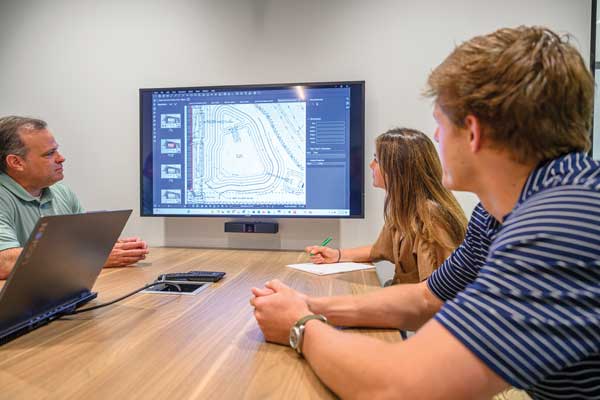
Part of Frampton’s team evaluates a potential site. Courtesy of Frampton Construction
At an industrial site located outside Raleigh, North Carolina, the original plan called for two large buildings, one measuring 285,820 square feet and the other 658,560 square feet. On paper, the site appeared flat and straightforward, but the economics didn’t hold. With lenders pulling back on large-scale speculative development and the client needing more optionality, the site was no longer viable as originally designed.
Frampton reimagined the layout to include five smaller buildings ranging from just under 100,000 square feet to 285,820 square feet, each with its own access and truck court. This opened the door to phased construction and made it possible to secure financing in more manageable increments. It also allowed for a more diversified tenant strategy — positioning the project to attract smaller users across different timelines rather than relying on a single anchor tenant.
The revised plan improved traffic flow, reduced permitting friction and gave the developer more control over sequencing. If demand softens or accelerates, the team can adjust accordingly without needing to lease or fund the entire site at once.
Designing for flexibility means moving beyond square footage as the sole measure of value. When building to fit the realities of the site and the market, developers gain more options to deliver long-term performance with less up-front risk.
Loop in Stakeholders Early to Unlock Site Potential
Some of the most significant development challenges happen before a site is even buildable. For an intermodal logistics facility in Summerville, South Carolina, Frampton led a multiyear effort to rezone agricultural land and secure the infrastructure needed to make the project viable.
The site lacked water and sewer service, requiring 1.5 miles of new utility extensions across multiple privately owned parcels. Frampton coordinated with four adjacent landowners, including a gas station, a church and a local homebuilder, to secure easements and facilitate a public-use utility corridor. In parallel, the team led a complex rezoning process that included close collaboration with county officials, traffic mitigation planning and direct outreach to neighboring residents.
These early stage efforts, typically outside the traditional scope of a general contractor, were essential to unlocking development value. By resolving infrastructure and entitlement hurdles up front, Frampton reduced long-term risk for the developer and helped deliver a functional cross-dock facility with intermodal access to the Charleston port.
The result was a 385,000-square-foot logistics hub delivered through a phased approach, balancing constructability, cost and market timing.
The New Rules of Site Selection
These projects illustrate a consistent truth: The most successful developments don’t just adapt to site conditions, they use them to drive smarter outcomes. In each case, early design flexibility, construction insight and stakeholder coordination played critical roles in preserving feasibility and protecting long-term value.
Here are a few lessons emerging as the new rules of site selection:
- Treat subsurface studies as a first-round investment rather than a formality.
- Design for the site you have, not the one you expected.
- Reduce financial exposure and improve leasing strategy with phased, flexible footprints.
- Overcome infrastructure and entitlement hurdles with early stakeholder engagement.
- It is often more cost-effective to work around site constraints than to try to eliminate them.
Site selection isn’t just a real estate decision. It is a preconstruction strategy. By bringing in construction professionals early enough to provide input, projects will be more likely to move forward and more resilient when conditions change.
Phillip Marino is vice president of preconstruction at Frampton Construction.