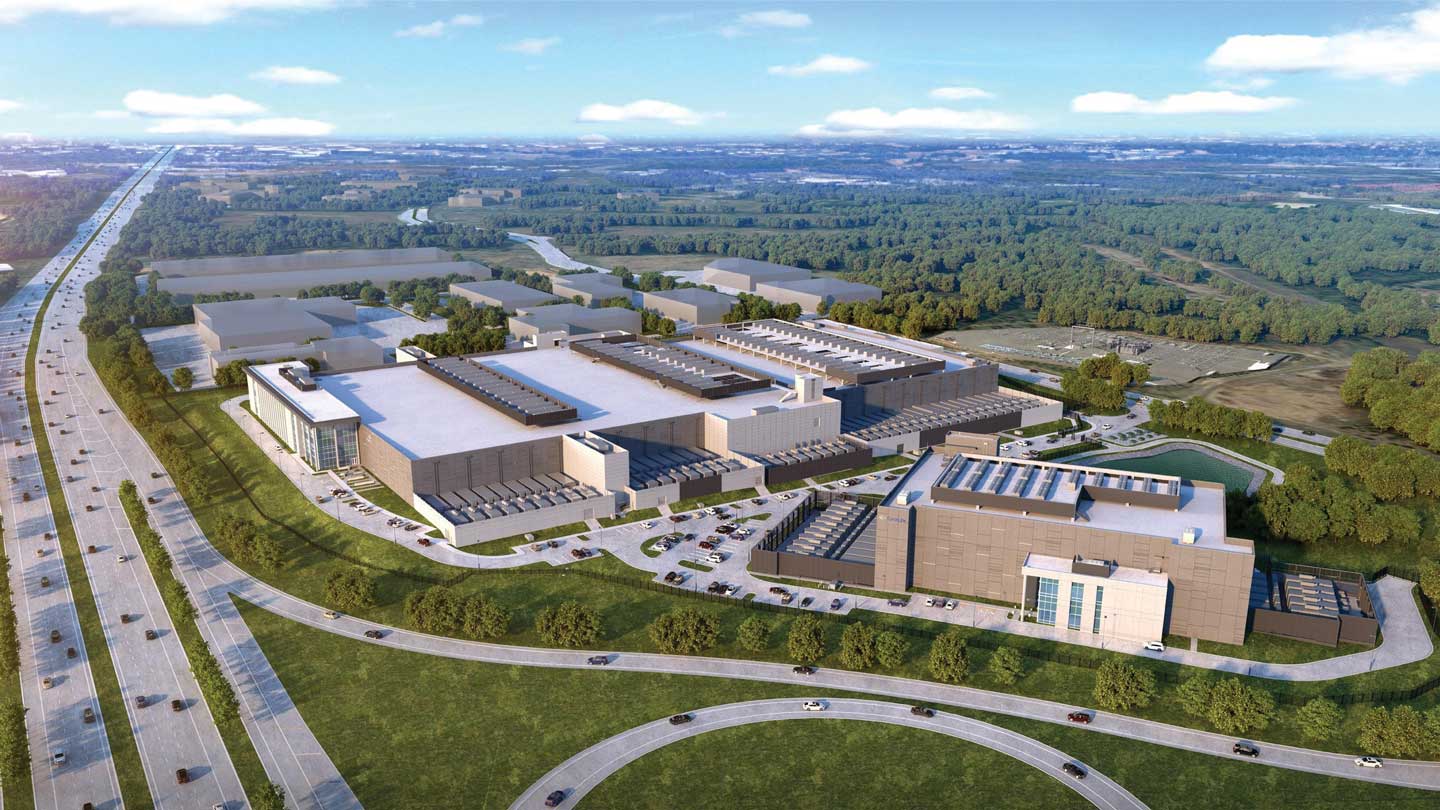
Navigating this changing market requires an integrated understanding of power infrastructure, site logistics and shifting regulatory framework.
The demand for more data centers, already steadily increasing, was supercharged when generative AI programs such as ChatGPT and Gemini hit the market. Now, the architecture, engineering and construction industry is challenged to keep pace, with data center vacancy rates dropping to a record low of 1.9% at the end of 2024, according to CBRE.
With the need for computing power increasing exponentially as AI is adopted more broadly, commercial real estate developers have an opportunity in an otherwise sluggish construction industry. At the same time, it is no longer the Wild West of the early 2000s tech boom or the rapid cloud expansion of the 2010s. Surging power demands, fewer sites that check all the predevelopment boxes and tighter permitting requirements mean that finding and developing a site requires foresight and expertise. As developers navigate this changing market, they should keep several important considerations in mind.
It’s Not (All) About Power
The amount of power available to a site is typically the first consideration for a data center, but it is not the be-all and end-all. Just as important is how much power is available per square foot of the site, known as power density. The ideal power density ensures that power is not going unused or the reverse: a site where large swaths of land stand vacant because there was not enough power available to continue building.
It is also vital to plan for evolving power needs. Large, master-planned campuses will require more power as each phase is rolled out over multiple years, and AI campuses will need to scale to support workloads that require two to three times more power per server rack than traditional applications.
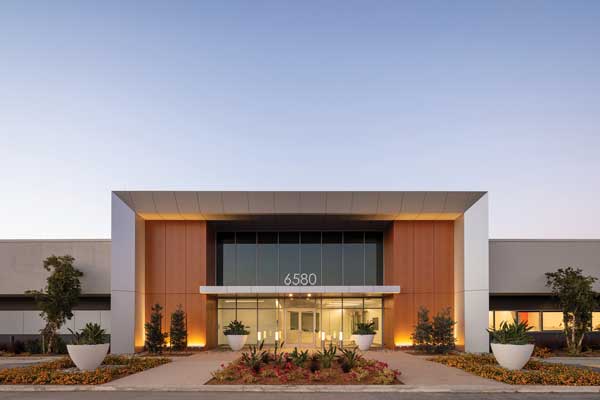
To minimize costly revisions and timeline delays, developers and designers need to be proactive in addressing performance and aesthetic requirements in the conceptual design phase. Courtesy of Corgan
To determine if a site’s power density will work for a client, the best approach involves using prototypical building concept designs to see what is possible and what is profitable. The prototype building program informs the anticipated power densities, cooling strategies and computer topologies that may be deployed on the site. These building blocks aid in initial evaluations and give clients a high-level visualization of the site’s possibilities. This allows clients to test fit multiple sites quickly while also moving key design decisions forward, reducing downtime and streamlining the due diligence process.
Beyond the immediate power capacity, a site’s ability to scale is an important long-term consideration as chip density continues to rise. Sites that allow for a phased power build-out, strategically aligned with the data center’s construction phases, offer significant advantages. Prototypical concept designs can also be helpful here, allowing developers to investigate both the power that is readily available and the utility provider’s detailed road map for delivering additional capacity to the site over time. This approach can mitigate substantial up-front capital on power infrastructure that isn’t immediately required, allowing for more agile financial planning.
Setting Up for Success
Once the power availability of a site is known, the next consideration is understanding the other infrastructure availability and the local development requirements, which are critical to positioning a site for success. Deployment of utility power to the site requires additional infrastructure, utility easements and a dedicated site development area, all of which affect the project’s schedule and budget.
Another consideration as power demands increase is creative power delivery strategies. Developers are more frequently weighing on-site generation and renewable energy integration. For sites where the power utility has not been coordinated, short- or long-term temporary power generation solutions may need to be addressed. This can add expense and may require additional coordination with other utilities and permitting with the governmental authority having jurisdiction (AHJ) over the site.
It is also important to understand what site modifications are necessary. Beyond power, utilities including fiber, water, sanitary and stormwater management should be considered and coordinated. Grading modifications that allow proper drainage are vital due to the facilities’ critical infrastructure and 24/7, year-round operations. Some sites may require retention ponds to handle runoff, which adds a large site element that needs to be incorporated into the facility or campus plan.
Acoustics are another major consideration, as data center generators and cooling systems may need to be managed to meet code requirements for noise pollution at the property line and beyond. In such cases, the developer may choose to work with an acoustician early in the process to understand expected decibel levels based on the site plan and equipment selection. Mechanical, electrical and plumbing partners and the client’s operational team should be integrated early so that space planning and infrastructure requirements are coordinated holistically.
The AI race has compressed project timelines, so speed to market is a significant advantage. Existing facilities that are repositioned may allow for greater speed to market — as the envelope is mostly complete and the extent of construction can be limited — but usually at a reduced scale. While some existing facilities can be retrofitted successfully, there are typically constraints due to structural limitations and other factors such as column spacing, floor-to-floor clear heights and roof capacity for equipment. New builds can take more time, but they have the benefit of being more customizable to the client’s needs.
Do Your Diligence
The final factor in site assessment is due diligence on the AHJ’s zoning and permitting requirements. As the data center market expands, the AHJ falls into two broad categories:
1) Primary markets close to major cloud availability zones that are becoming more sophisticated in terms of their requirements.
2) Secondary markets with available power and land that are newer to the data center world and could become overwhelmed by the process.
While many states offer incentives for data center construction, some primary markets are pulling back on permitting approvals because local utility grids are experiencing the strain. For example, Atlanta, one of the fastest-growing data center markets, recently passed an ordinance requiring a special-use permit for all new data center proposals.
In primary markets, knowing how to coordinate with the AHJ for zoning and permitting is necessary to avoid a project (and its timeline) becoming prohibitively expensive. In these markets, the development process can involve long review and comment periods, public hearings and other processes that push the timeline back. Often, the process in these markets requires the campus design — and building elevation designs — to be submitted and approved before the permit is granted.
To be approved, the AHJ may require changes that elevate the design, increase glazing proportions and change materiality, in addition to making other building form modifications that increase the cost per square foot. The AHJ may even require a specific building orientation, impacting a site plan that was previously optimized for power density and other site considerations. Developers and designers should engage with the AHJ early to develop strategies that address performance and aesthetic requirements in the conceptual design phase to minimize costly revisions and timeline delays.
While proximity to major cloud availability zones remains important, power availability and regulatory environments may outweigh geographic preferences, meaning there is increased activity in secondary markets that offer favorable infrastructure and permitting conditions. While this can facilitate faster speed to market, the AHJ in these markets may not be used to the scale and volume of documentation being submitted, resulting in unexpected slowdowns. In this case, success hinges on the ability to integrate local regulatory nuances and specific AHJ preferences with streamlined design document generation, phased submission strategies and optimized construction processes.
Shaping the Future of Data Centers
While power remains the most important factor, a successful data center project isn’t only about max power. It’s about establishing other critical elements — zoning, utility agreements and thoughtful site planning — to ensure a strong understanding of the maximum site development and the timeline to achieve it. Navigating complex processes effectively requires an integrated understanding of power infrastructure, site logistics and shifting regulatory frameworks.
As the data center industry continues to evolve, developers can anticipate an even greater emphasis on sustainable power solutions and innovative integration of emerging cooling technologies that will help further shape the future of data center architecture, site selection and development.
Jonathan Bartkowicz is a vice president and the data centers studio leader in Chicago at Corgan.