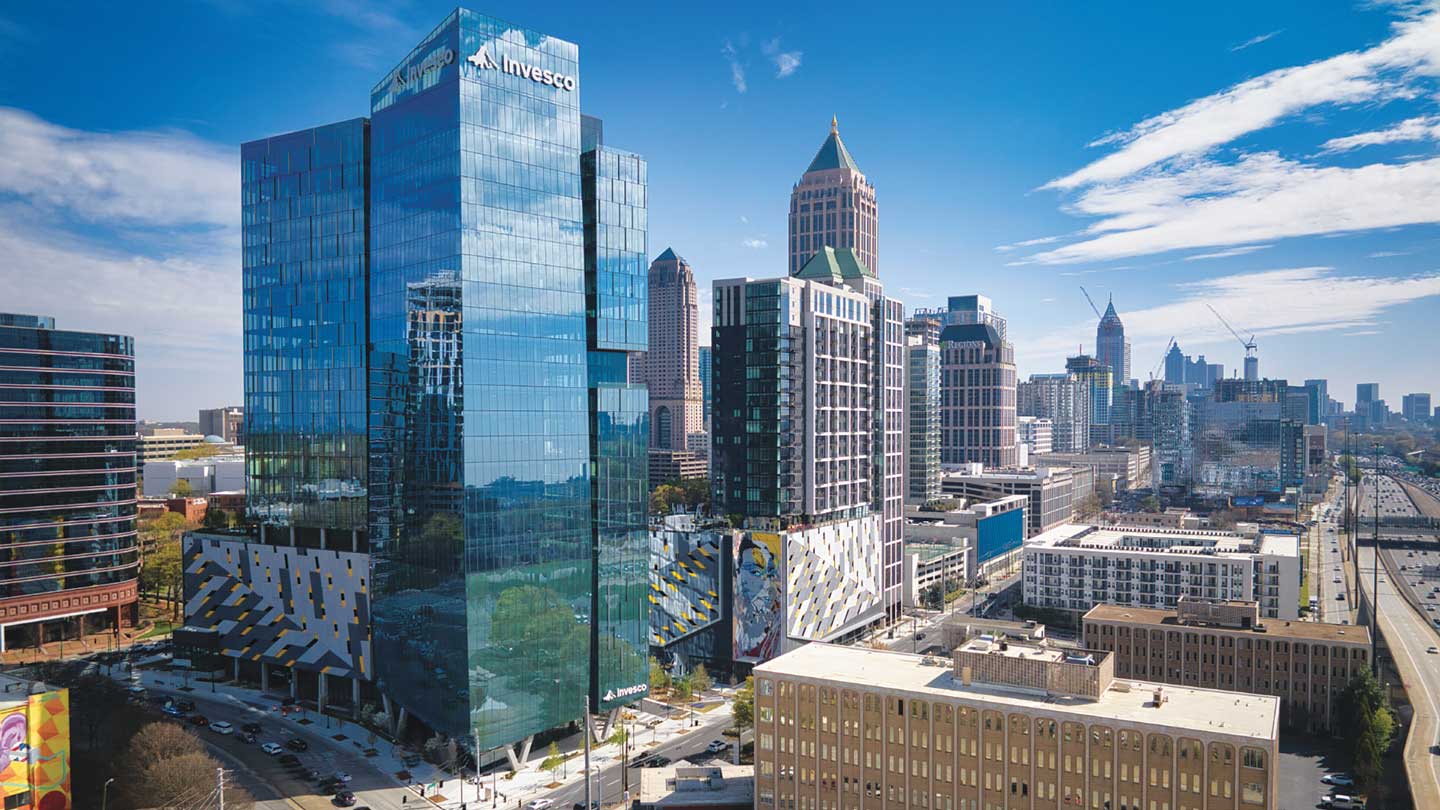
Lenders and buyers are on the lookout for “critical mass” and key property features.
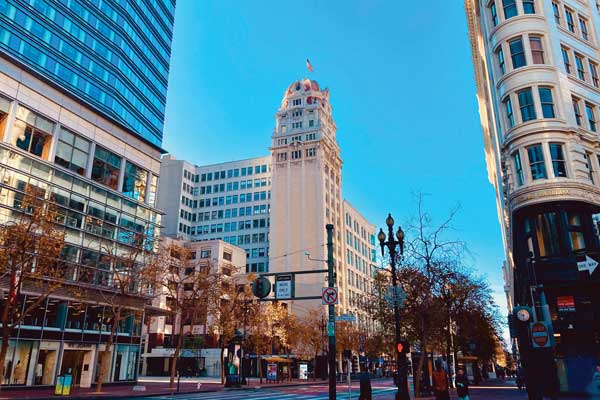
San Francisco’s battered office real estate market experienced a revival in 2025, and ground could be broken for a new 1,225-foot office tower that would be the tallest such structure on the West Coast. Houston-based Hines recently initiated a city review process to pursue the project, which, according to a recent Wall Street Journal article, coincides with a strong rebound in the city’s leasing activity.
Especially hard hit in the wake of the COVID-19 pandemic, San Francisco saw office vacancies skyrocket and office property values plummet. The advent of artificial intelligence, however, has breathed life into the city’s commercial real estate (CRE) market as new and rapidly growing technology firms seek office space. The Journal noted that major institutional investors such as Blackstone are buying properties at large discounts, while real estate services firm JLL reported that tenants leased 5.1 million square feet in San Francisco in the first half of 2025, more than some prepandemic years.
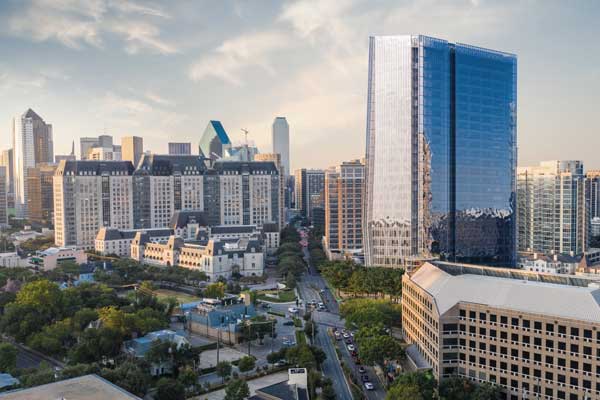
Granite Properties and Highwoods Properties recently delivered 23Springs in Dallas. The 26-story, 625,215-square-foot office tower was 63% leased before opening and has attracted several leading financial, legal and real estate companies. GFF
The city still has a long way to go. At the beginning of September, San Francisco’s office vacancy rate was hovering at just under 23%, according to Moody’s Analytics, three times its prepandemic rate and above the 20.6% national average. Nevertheless, global real estate investment manager Hines clearly sees life returning to the city’s office market, at least for certain properties, and that trend appears to be unfolding across the country.
“A lot of our clients are no longer completely disregarding office, whether it’s lending or investing clients,” said Thomas LaSalvia, head of commercial real estate economics at Moody’s. “They’re looking for opportunities where they may have less competition.”
Leasing and construction of new office space essentially halted in the first few years of the pandemic and the advent of remote work. It began picking up again in 2023, even after interest rates skyrocketed in the second half of 2022, fueled in part by return-to-office mandates.
Lenders, however, have focused primarily on Class A buildings, and specifically the trophy variety that resemble what Hines has planned for 77 Beale St. in San Francisco. Encompassing a city block, the tower will mix modern office space, residential units, ground-level restaurants and retail space, and a public garden.
Not all cities are so fortunate to be the location of choice for a quickly growing industry like AI. However, demand has emerged across the country for office buildings with certain features, particularly if the properties are in neighborhoods with “critical mass,” which some metro areas generate more easily than others.
Lenders’ Flight to Quality
The Hines project is a prime example. Its mix of high-end office and residential space, as well as proximity to mass transit and major roadways, dining options and green space are all important features of trophy office buildings. Additional amenities are certain to be announced. Options increasingly associated with trophy properties include concierge and day care services, covered parking, gyms and showers, bike storage, and perhaps a pickleball court on the roof.
Most trophy office buildings have been built in the last 20 years. Iconic skyscrapers in central locations, such as New York’s Empire State and Chrysler buildings and Chicago’s Sears Tower, have been extensively renovated and also fit into the trophy category, although some amenities may be lacking.
In New York City, trophy office towers on Park Avenue, in Times Square and at Hudson Yards provide those trophy features, and the commercial mortgage-backed securities (CMBS) sold to finance such properties, backed by a single asset, single building (SASB), have found strong demand. Trepp reported that the volume of private-label CMBS in the first half of 2025 was the highest in 15 years, despite a dip in the second quarter, and three quarters of that was SASB transactions. The CMBS conduit deals that make up the rest usually hold a mix of nontrophy CRE loans, with between 10% and 20% supporting office properties, down from more than 40% before the pandemic.
Looking Beyond Trophies
Tracy Chen, a portfolio manager at Brandywine Global Investment Management, said investors are starting to look at Class B and C buildings in or adjacent to those New York hot spots, which offer retail shops and restaurants, transportation options and other key neighborhood features, even if the buildings themselves are less impressive. Office properties outside those areas, however, are still struggling. “It’s still a buyer’s market there,” she said.
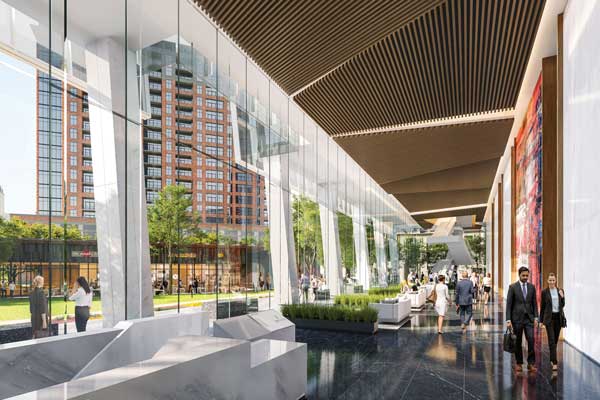
23Springs is “focused on maximizing productivity, comfort and connection through a unique set of collaborative spaces and amenities for top talent to enjoy,” said Paul Bennett, senior managing director, Granite Properties. “The building’s early leasing success validates our growth strategy focused on developing and acquiring best-in-class buildings located in exceptional mixed-use environments in high-growth Sun Belt cities.” GFF
Important neighborhood features include a mix of leisure, hospitality and entertainment, which all together foster foot traffic and what LaSalvia called “a center of gravity” from which nearby nontrophy office properties benefit.
“If you have that mix, developers may see an opportunity to invest in properties that will never be Class A trophies, but instead A, A-minus or even B-plus buildings,” LaSalvia said.
Other cities are taking measures to engender those centers of gravity, often with public-private partnerships that may focus on revitalizing an area of just a few blocks. The intent is to generate sufficient activity so that it becomes self-perpetuating and spreads to surrounding blocks.
LaSalvia pointed to San Francisco, whose municipal government has helped sponsor events such as the Downtown First Thursdays street party and Let’s Glow SF, a free holiday event in which large-scale art concepts are projected nightly across the facades of iconic financial district and other downtown buildings. The city has approved one office-to-residential conversion, the Humboldt Bank Building, and in the last year passed several reforms to encourage additional conversions in an effort to reduce the supply of office space and bring more people into downtown neighborhoods.
“It’s trying to move away from the 9-to-5 model toward the 24-hour model,” LaSalvia said.
Similar efforts are underway in Chicago’s Millennium Park and Fulton Market neighborhoods and Dallas’ Warren Park. Such “gateway” cities serve as transportation hubs and entry points for trade, however, providing them with significant advantages over other metropolitan centers. Importantly, they support a wide range of businesses, including white-collar firms in areas such as wealth management, accounting and law, that often reside in Class B and nontrophy Class A properties and tend to be more resilient when the economy falters.
Cities Facing Challenges
On the other hand, LaSalvia said, markets such as Denver, St. Louis and Charlotte, North Carolina, have fewer major employers and have experienced a deterioration in fundamental property performance.
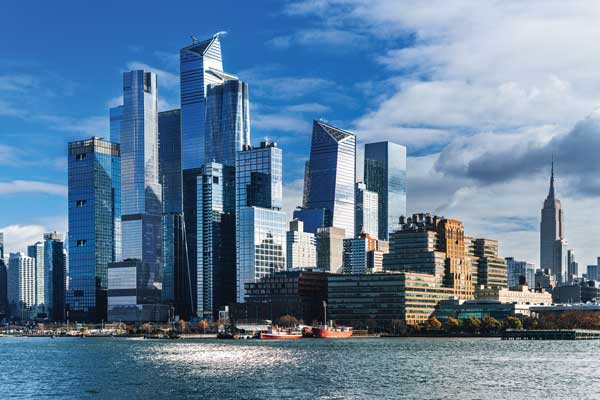
Trophy office towers remain in high demand in areas such as New York City’s Hudson Yards. Nikada/E+ via Getty Images
“Occupancy has gone down, expenses have gone up, and it’s difficult to operate as a business,” he said.
Those cities are struggling to avoid the so-called “doom loop,” in which lower occupancy rates lead to lower property values and tax revenues, fewer public services, less surrounding economic activity and still lower occupancy rates — a red flag for investors.
“Without that activity and vibrancy, that critical mass, you may be throwing good money after bad,” LaSalvia said.
A current tailwind for office property occupancy and valuations is the lack of new construction since the pandemic, due to the emergence of remote work and, more recently, high funding and material costs. But there’s still a glut of office space that must be winnowed before the nontrophy market returns to health.
“The office usage rate in the 10 largest cities is still stuck at about 60% when compared to a 100% baseline before the pandemic. And that’s a big problem” said Mark Bhasin, senior vice president of Basis Investment Group and adjunct associate professor at New York University’s Stern School of Business.
Local governments are taking measures to facilitate conversions of office buildings to other uses, particularly multifamily housing, and that will help chip away at supply. RentCafe estimated a record 70,700 office-to-residential conversions in 2025, up from 23,100 in 2022.
Thomas Taylor, head of CRE and CMBS research at Trepp, pointed to growing opportunity in the “value-add space” that should attract investors willing to take additional risk for elevated returns.
“Private capital is hopefully going to step in with solid underwriting and partner up with solid developers who can look at the costs and demographics and do the math to determine the feasibility of office-to-multifamily conversions,” Taylor said.
The Outlook for Interest Rates and Financing
Another key factor for funding conversions and renovations will be interest rates, which remain in flux.
S&P Global noted in a report published at the end of July that office real estate prices have stabilized and that investors with significant capital have shown an appetite to acquire properties at discounted valuations. The rating agency added that it anticipated the Federal Reserve cutting rates by 50 basis points in the fourth quarter, easing access to capital for especially speculative-trade issuers.
“Everyone is waiting for the Fed to cut interest rates, and CRE is the most sensitive sector to rates,” Chen said. “If they do cut aggressively, it will be a mini-boom in CRE, even for the office sector.”
Even so, financing won’t be easy to come by. Banks have largely sought to modify their clients’ underwater CRE loans rather than refinance them, but the CMBS market provides insight into where nontrophy properties stand.
Chen said Class A office buildings typically have little difficulty refinancing their SASB CMBS, but it’s a different story for office CRE loans in conduit CMBS transactions, where investors have tightened their lending standards significantly. Prepandemic, loans usually carried debt service coverage ratios (indicating borrowers’ ability to pay their debt obligations) between 1.5 and 1.8, she said. Now, they are between 1.8 and 2.6. Loan-to-value ratios that were above 65 before the pandemic now range between 55 and 65, she said, and borrowers can expect to pay 10% to 13% yield in interest compared with 10% to 11% previously.
San Francisco approved the Humboldt Bank Building as the first office-to-residential conversion in the city since the COVID-19 pandemic. Wirestock via iStock Editorial/Getty Images Plus
“Those metrics are also dependent on property type and the quality of the property,” Chen said. “These are important to determine whether the loan can be refinanced in the future.”
Given where interest rates stood at the end of September, a few cuts will be insufficient to refinance many existing office CRE loans. S&P Global noted that tariffs could increase inflation, in turn keeping monetary policy tighter and even leading to higher long-term market rates. That would bode poorly for office loans that were originated before the jump in rates in the latter half of 2022, since they will have to refinance into a much higher rate environment.
Many nontrophy buildings, especially in gateway cities, still have reasonable occupancy rates and house mostly white-collar firms. Their finances are solid under the terms of their current loans, but the interest rates on those loans may be close to 3% compared with current market rates in the 6% to 8% range.
“Even if the property is performing under its current debt and the fundamentals are relatively strong on that property, generating enough operating income to cover current debt service, there is no way for it to qualify for the loan proceeds that would take out the existing principal balance,” Taylor said. “The capital markets and valuation paradigm have shifted.”
Confronting Risk
The situation will be even more dire in cities such as Portland, Oregon, and Hartford, Connecticut, where there has been a fundamental deterioration in property performance and office CMBS delinquency rates are among the highest in the nation.
“These cities have some industry, but it’s not a very deep bench as far as white-collar employers,” Taylor said, adding that other cities with high delinquency rates, including Atlanta, Minneapolis and Philadelphia, have more diversified economies but may have overbuilt, slowing their recoveries and increasing risk for lenders.
“I call that more of a CFO problem than a COO problem, in that there was probably an overextension of leverage versus a failure in performance,” he said.
The paradigm has shifted even for bonds originally rated AAA and backed by single properties — the SASB CMBS deals that currently draw the most investor interest. For example, a dramatic reassessment of the value of the Worldwide Plaza building, a 49-story Midtown Manhattan skyscraper built in 1989, stands to saddle AAA investors with losses of 20% and wipe out lower-ranking debt, according to an August Bloomberg article.
“Loans suddenly get distressed when tenants move out, and landlords have a hard time finding replacements,” Chen said. “Investing in CMBS-seasoned legacy deals in the 2015 to 2019 vintage is very challenging.”
John Hintze is a freelance writer in Newark, New Jersey. He writes regularly for publications covering banking, the financial and derivatives markets, corporate finance and risk issues.
An Eye on Distressed PropertiesIn a June research report titled “The Office Reset: Now May Be the Time to Buy,” Trepp laid out several factors when considering office properties, noting that “buying opportunities many assumed would have taken shape in 2023-2024 are finally starting to present themselves.” Financial activity related to office properties has increased dramatically this year, the report said, with $10.1 billion in commercial mortgage-backed securities backed by office properties issued in the first quarter of 2025, an amount that exceeds all office CMBS originations in 2023 and 2024 combined. New York City accounted for $7.3 billion, while San Francisco — somewhat surprisingly given the city’s recent history — accounted for $1 billion, in both cases mostly top-of-the-line Class A properties. The rest of the report focused on “everything else,” including where opportunities might be to buy distressed properties. Looking at properties nationwide, their age and whether they have active loans and occupancy rates below 60%, indicating distress, Trepp identified 279 office loans with outstanding balances totaling $9.02 billion. Well over three quarters of those loans were for properties built before 1990, which tend to have minimal amenities and are generally less desirable compared to modern buildings. “These are the buildings that should be targeted for purchase at aggressive pricing,” according to the Trepp report. Trepp said a significant portion of the loans held debt service coverage ratios below 1.0, “signaling a pool of assets ripe for acquisition,” since the distress has been realized and the assets may be undervalued or mismanaged, enabling “investors to acquire and reposition the operations for higher returns.” The most quantifiable challenge facing distressed office owners is the higher interest rates they will have to refinance into. Trepp found that $6.6 billion of the loans it examined were originated with rates between 3.5% and 5.49%, while the rates of most recent originations rested between 6.7% and 7.75%. “This should lead to increased distressed sales or recapitalization needs,” the report said, “creating buying opportunities for well-capitalized investors” if they can purchase the properties at steep discounts. Trepp said lenders have had plenty of time to reserve for some amount of office-loan losses, so if rates remain higher for longer, “they will begin strategic portfolio reallocation and divestment.” |