Both new grid development and upgrades to existing infrastructure are urgently needed.
In 2024, 60 data centers in Northern Virginia dropped off the electric grid at the same time because a piece of equipment that shields transmission lines from surges, known as a lightning arrester, failed, causing a voltage drop. Fortunately, PJM Interconnection, the local grid operator, reacted in time to prevent a cascading blackout. As electric grids across North America become increasingly strained, near-miss incidents like this one will eventually cause serious issues unless governments act to upgrade grid infrastructure and improve reliability.
Over the next five years, North America’s consumption of electricity will increase precipitously because of AI and data centers, reshoring and onshoring of manufacturing, and building electrification mandates.
Blackouts Past and Future
When an electric grid fails, it can cause a power outage for an entire geographical area. This is known as a blackout. Although such events are rare, the U.S. has experienced multiple major blackout episodes, most commonly due to extreme weather. During a series of winter storms in 2021, much of Texas experienced power outages, resulting in hundreds of deaths and hundreds of billions of dollars in property damage. The Electric Reliability Council of Texas reported that the grid was “4 minutes and 37 seconds” away from catastrophic failure.
Another major blackout in 2003, caused by a combination of high heat and computer failures, affected over 50 million people in the Northeast. The event prompted passage of the Energy Policy Act of 2005, which designated the North American Electric Reliability Council (NERC) as the electric reliability organization of the United States. Every year, NERC publishes a long-term reliability assessment (LTRA) that projects grid reliability over the next 10 years.
In its 2024 LTRA, NERC reported that over half of North America faces an elevated risk of shortfalls over the next decade. “Elevated risk” is defined as a shortfall being likely to occur during extreme weather events. Areas identified as being at elevated risk include California, Texas, New England, the U.S. Midwest, the Great Plains, portions of the Southeast, and the provinces of British Columbia, Saskatchewan, Manitoba and Ontario. NERC’s findings indicate that as electricity demand increases, the electric grid status quo is not sufficient for reliability.
Transmission Siting and Permitting
To keep the electric grid reliable in the near future, existing grid infrastructure must be upgraded and new transmission infrastructure must be built. The National Renewable Energy Laboratory found in a 2024 report that the U.S. transmission system must double in size by 2050 to guarantee reliability. In the nearer term, the United States needs significant expansion of the grid by 2035 to keep up with demand. The good news is that NERC’s 2024 LTRA found an increase in transmission projections for “the first time in recent years.” Unfortunately, those projections show up only in planning, not in construction data thus far.
As developers are aware, the permitting process for a new project can impose significant costs and delays. Grid infrastructure faces much the same problem. Stakeholders for any new transmission project include federal, state and local governments, plus any private landowners and other interest groups. Securing approval from all these parties can take years — often more than a decade. Environmental review requirements can also delay grid infrastructure projects, counterproductively reducing access to electricity over other energy sources.
Grid Modernization
While new grid development is greatly needed, modernizing and upgrading existing infrastructure is also a priority. In particular, vital components known as transformers require imminent replacement.
Transformers are devices that increase or decrease voltage during the transmission of electricity. Transformers are needed to increase voltage when electricity moves from generation to transmission lines, and again to decrease voltage before electricity arrives to consumers. As of 2025, 55% of U.S. transformers were more than 33 years old. Additionally, increased electricity demand will require the United States to have 260% more transformers by 2050.
Transformers are just one element of the aging grid; 70% of all U.S. transmission lines are over 25 years old, more than halfway through their lifespans. If the electric grid continues to age without significant upgrades, the likelihood of failure will only increase as time goes on.
Policy Solutions
With so many threats to and burdens on the electric grid in coming years, governments at all levels have their work cut out for them to ensure transmission reliability. One major policy intervention that would help tremendously is permitting reform. Permitting for new grid transmission sites must be predictable, consistent and transparent. Much like in real estate, clear permitting processes are necessary to increase supply. State governments should identify where grid infrastructure is most needed and work with local governments to streamline the permitting process.
As permitting challenges demonstrate, a significant challenge for the electric grid in general is the number of overlapping jurisdictions and stakeholders required to coordinate. The grid is managed by regional transmission operators, owned by utility companies, and often permitted by multiple state and local governments. If these various entities and governments set up interjurisdictional programs for development beforehand, the process can be markedly streamlined. This is an area where the federal government, particularly entities like the Federal Energy Regulatory Commission and the Department of Energy, could foster cooperation.
State governments could help reduce reliability issues by allowing businesses to use behind-the-meter energy generation and storage. Behind-the-meter generation refers to energy sources operated by individuals or businesses that are independent from the grid and intended for on-site use. When businesses can use behind-the-meter generation and storage, it reduces strain on the grid and provides backup during blackout events. Microgeneration sources like solar panels can also generate electricity behind the meter that can then be sold back to the electric grid if there is a surplus.
Finally, governments and data center developers must work together as much as possible to ensure their incentives and planning are aligned. Governments should consult with developers concerning where grid infrastructure will be needed. Data center developers should be included in all government planning decisions so that governments know where grid risk will be in the future. This is one reason that the government affairs work performed by NAIOP chapters is so important.
With each passing year, energy demand, supply and transmission become more important to the success of the commercial real estate industry. State and local governments must take action to keep grid infrastructure up to date and guarantee reliability. At the same time, real estate owners and developers must stay aware of the risks and prepare for what North America’s energy future holds.
Jack Hargrove is NAIOP’s director of state and local affairs.
RELATED ARTICLES

Securing the Reliability of Electric Grid Infrastructure
Both new grid development and upgrades to existing infrastructure are urgently needed.
Read More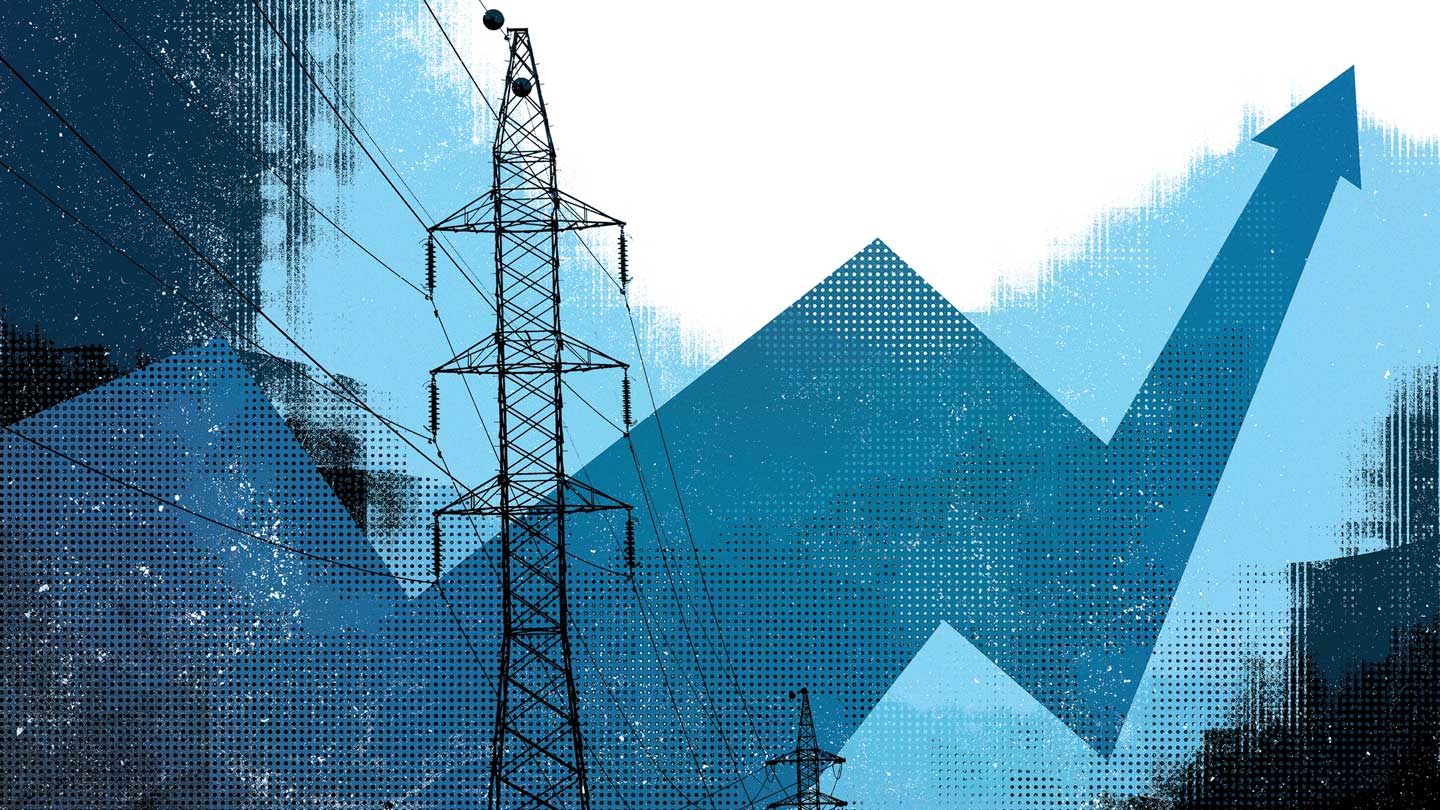
State Action for Ensuring Sustainable Electricity Supply
Rapidly increasing energy demands pose challenges for commercial real estate.
Read More
Rightsizing the Federal Real Estate Portfolio
Disposal of underutilized properties could create challenges for the commercial real estate sector and local economies.
Read More